← BRANDS
datastats / Money
LIVE
Money

eBay

eBay is the world's biggest garage sale dressed up as a marketplace, and the fees, scams, and fine print are what its slick homepage will never tell you.
By · datastats · Updated June 4, 2026
eBay
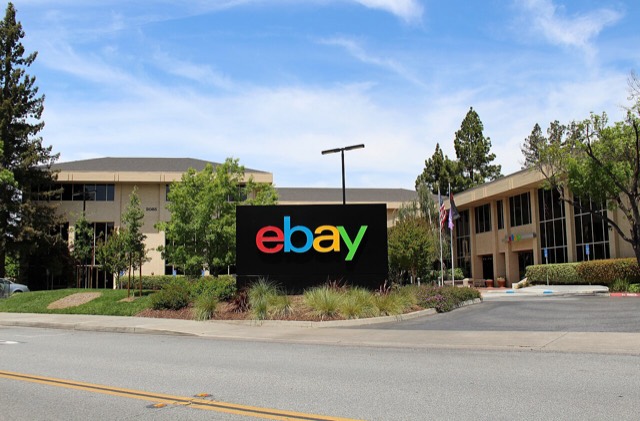
Coolcaesar · CC BY-SA 4.0

eBay launched in 1995 and never really stopped being what it was at day one: a peer-to-peer bazaar where anyone can sell anything to anyone, with the company collecting a toll on every transaction. It has over 130 million active buyers globally and tens of millions of listings live at any given moment, making it one of the most searched brands on earth for a reason.

People don’t just search eBay because they want to buy something. They search it because they got burned, they’re confused by the fees, they suspect a seller is shady, or they’re trying to figure out whether cashing in on their attic haul is actually worth it after eBay takes its cut. The questions are almost never “how great is eBay?”, they’re survival questions.

The platform sits at a genuinely weird crossroads: it’s simultaneously a legitimate marketplace trusted by Fortune 500 liquidators and a hunting ground for some of the internet’s most creative fraudsters. That tension is exactly why the brand generates so many anxious, suspicious, deeply practical searches.

eBay has also shifted its business model significantly over the years, killing PayPal as its payments backbone, launching its own “Managed Payments” system, and adjusting fees in ways that quietly squeeze sellers. If you’re not paying attention, eBay will happily let you not pay attention.

People also ask

Because eBay shipping cost is almost entirely set by the individual seller, not eBay, and many sellers are quietly padding it as a profit center or simply don't know how to negotiate carrier rates. eBay does offer discounted USPS, UPS, and FedEx labels through its platform, but sellers aren't required to use them, and some don't. The other factor: for heavy, bulky, or rare items, dimensional weight pricing from major carriers genuinely is brutal in the post-pandemic era. If a shipping cost looks absurd, compare it against eBay's own shipping calculator before you assume the seller is ripping you off, sometimes they are, sometimes the carrier is.

Yes, with conditions. eBay's Money Back Guarantee is real and broadly reliable: if an item doesn't arrive or isn't as described, eBay will refund you, full stop. That policy gives the platform a floor of safety that bare Craigslist or Facebook Marketplace transactions simply don't have. However, "safe" doesn't mean "scam-free." Sophisticated fraud exists, feedback scores can be gamed, and high-value categories like electronics and sneakers attract the most counterfeits. Stick to sellers with substantial feedback (hundreds of completed transactions, 98%+ positive) and pay through eBay's checkout, never off-platform, and you're in a genuinely protected position.

The catalogue is long, and fraudsters update their playbook constantly. The classics: counterfeit goods (especially sneakers, jerseys, and luxury items), fake tracking numbers that show a package "delivered" to the wrong address so the seller can claim fulfillment, and "empty box" scams where the buyer claims non-receipt on a real item. On the seller side, the most common hit is the overpayment scam, a buyer sends a fake cashier's check for more than the asking price and asks for the difference back in gift cards. There's also the off-platform redirect, where someone emails you asking to complete the deal outside eBay to "save fees," which immediately strips you of all buyer/seller protections. If it feels like a workaround, it's a scam.

Because eBay is a secondary market with no inventory of its own, sellers are often liquidating, downsizing, or competing aggressively against each other with no retail overhead to recover. You're frequently buying from someone whose cost basis is zero (they inherited it, found it, or already used it), which means the floor price can be shockingly low. Auction format also routinely undersells items when bidder interest is thin. That said, "cheap" isn't universal, collectibles, rare sneakers, and vintage items often sell above retail on eBay precisely because demand is concentrated and supply is scarce.

This refers to a specific investigative piece published by The Ringer (the sports and pop-culture media outlet), not an eBay product or person. The Ringer has covered eBay in the context of sports memorabilia, sneaker resale culture, and collectibles markets, where eBay is a dominant pricing benchmark. If you're looking for a specific article, searching The Ringer's site directly with "eBay" will surface it faster than anything else.

eBay Inc. is a publicly traded company (NASDAQ: EBAY), so it's owned collectively by its shareholders, no single individual owns a controlling stake in day-to-day terms. Pierre Omidyar founded it in 1995, and while he remains a significant shareholder, he stepped off the board in 2023 and has no operational role. As of the mid-2020s, the largest institutional shareholders are major asset managers like Vanguard and BlackRock. The CEO running the company is Jamie Iannone, who took the role in 2020.

There are three main layers sellers need to know. First, the insertion fee, usually free for your first 250 listings per month in most categories, then $0.35 per listing above that. Second, and most important, the final value fee, eBay takes a percentage of the total sale price including shipping, typically ranging from 3% to 15% depending on category, with most categories landing around 13.25%. Third, if you have an eBay Store subscription, you pay a monthly fee ($7.95 to $349.95/month depending on tier) in exchange for lower final value fees and more free listings. Payment processing is now baked into the final value fee, there's no separate PayPal charge anymore.

If you sell fewer than 50 items a month, no Store subscription is likely worth it, the math just doesn't work in your favor. The Starter Store ($7.95/month) makes sense if you're a light seller wanting a custom storefront for branding. The Basic Store ($27.95/month) is the sweet spot for most hobbyist-to-serious sellers moving 100–250 items monthly, since the discounted final value fees start paying for the subscription. Premium and above ($74.95–$349.95/month) are for high-volume professional sellers running thousands of listings. Run eBay's own fee calculator with your actual sales volume before committing, the break-even point is different for every category.

The short version: expect eBay to take roughly 13–15% of your total transaction (item price + shipping) in most mainstream categories through its final value fee. Add the $0.35 insertion fee if you've burned through your free monthly listings. For motors, real estate, and a handful of specialty categories, the fee structure is capped or calculated differently. The number that surprises most new sellers: eBay's final value fee applies to the shipping charge too, not just the item price, so inflating shipping to hide profit is less effective than sellers think.

eBay doesn't officially stand for anything, it's not an acronym. Pierre Omidyar originally built his auction site under the name "AuctionWeb" in 1995, housed on a domain he'd registered for his consulting company called "Echo Bay Technology Group." When he tried to register echobay.com, it was taken, so he shortened it to eBay.com. The name is a happy accident of domain availability, not a grand branding statement.

Heavy equipment, motors (vehicles), and real estate carry the lowest percentage fees because eBay charges flat or capped fees rather than a percentage of a $40,000 car sale. For regular goods, books, DVDs, music, and video games have historically had lower final value fees than fashion or electronics. Musical instruments and gear also tend to run lower. If fee minimization is your goal, heavy equipment and motors are where eBay most clearly pulls its punches, but you need the inventory to match.

eBay was founded on September 3, 1995, by Pierre Omidyar in San Jose, California. The first item ever sold on the platform was reportedly a broken laser pointer for $14.83, Omidyar emailed the buyer to confirm he understood it was broken, and the buyer replied that he collected broken laser pointers. The internet was already weird in 1995.

Under eBay's Managed Payments system, funds are typically available within 1–3 business days after the buyer's payment clears and the item is confirmed as tracking toward delivery. For new sellers or those with limited history, eBay may hold funds for up to 21 days, a deliberate friction point designed to protect buyers and reduce fraud risk. Once you've built a track record (typically 25 transactions and 90 days), holds become rare and payouts flow on a regular schedule you can set yourself.

If a buyer opens a return or "item not as described" case and it's resolved in the buyer's favor, either by the seller accepting the return or eBay stepping in, the refund is typically processed within 3–5 business days back to the original payment method. eBay's Money Back Guarantee means the platform will force a refund even if the seller refuses, and in those cases eBay may eat the cost and then pursue the seller separately. Don't wait more than 30 days after estimated delivery to open a case, that's eBay's claim deadline.

If a seller cancels an order, the buyer receives a full refund, no exceptions, no fees lost. The seller, however, takes the hit: a seller-initiated cancellation dings their defect rate, which affects their seller standing and can eventually restrict their selling privileges. eBay tracks these cancellations because they're a reliable signal of sellers listing items they don't actually have. If a seller cancels on you and you suspect they relisted the item at a higher price, that's a reportable violation.

eBay issues a 1099-K to sellers who exceed $5,000 in gross sales in a calendar year, a threshold that was in flux after the IRS announced (then delayed, then partially reinstated) a much lower $600 trigger under the American Rescue Plan. As of the mid-2020s, check the IRS's current threshold for the tax year in question, because the rules shifted repeatedly. Critically: eBay reports gross sales, not profit. If you sold a $200 item you bought for $180, you owe tax only on the $20 gain, but you have to track and document that cost basis yourself.

The "ship by" date is the deadline eBay calculates for the seller to hand the package to the carrier, based on the seller's stated handling time and the buyer's selected shipping speed. Missing it is a real problem: late shipments count against the seller's on-time shipping metric, and enough misses can cost them Top Rated Seller status or trigger account restrictions. For buyers, if the ship-by date passes with no tracking update, that's your green light to message the seller, and if there's no resolution, to open a case.

"Ended" on an eBay listing means the listing is no longer active, the auction closed, the Buy It Now sold, the seller manually ended it early, or the listing duration expired without a sale. An ended listing with no sale record visible typically means the seller pulled it. You can still view ended listings in search (filter for "completed listings") to research what items actually sold for versus what they were listed at, one of eBay's most useful and underused features for price research.

Video games on eBay come from individual sellers, collectors downsizing, thrift-store flippers, estate sale liquidators, and retro game shops using eBay as a sales channel. There's no central eBay warehouse stocking games; every listing is a private party. This is why condition, completeness (cartridge only vs. complete in box), and seller reputation matter enormously in this category. Retro game prices on eBay are also a primary data source for price guides like PriceCharting, which uses eBay sold listings as its real-world benchmark.

eBay was born in San Jose, California, in 1995, built by Pierre Omidyar, a French-Iranian-American software engineer, initially as a side project on Labor Day weekend. The founding myth that it was created to help his fiancée trade Pez dispensers is charming but was largely a PR invention by an early eBay publicist, Omidyar has confirmed the real motivation was building a more efficient market for individuals. It went public in 1998, minted multiple millionaires among early employees, and became one of the defining companies of the first dot-com era.

Related topics
Money Trending now
Richest people in the world 2026
Money Trending now
How to cancel Amazon Prime
Money Trending now
Coinbase vs Binance
Money Trending now
How to cancel Adobe Creative Cloud
Money Trending now
Compound interest
Money People
Bernard Arnault
Money People
Mark Cuban
Money People
Mukesh Ambani