Dacia - People also ask
Dacia is the budget car brand that Renault built to dominate emerging markets, and it's quietly embarrassing premium rivals on value, volume, and reliability.
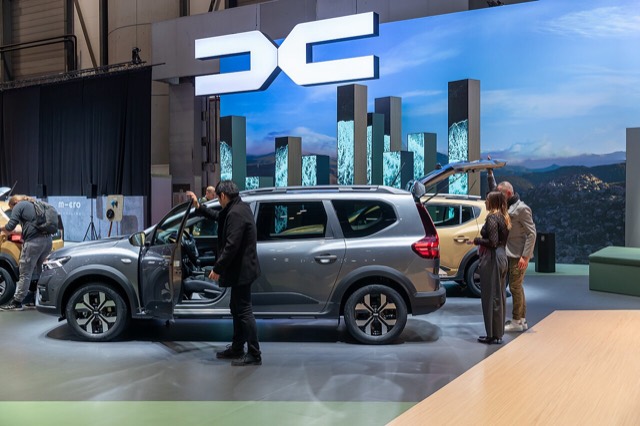
Dacia is a Romanian automaker founded in 1966, originally built to put communist-era Romania on wheels. After decades of producing Soviet-flavored economy cars, it was acquired by France’s Renault Group in 1999 and completely transformed into the group’s no-frills, high-value weapon for price-sensitive buyers worldwide.
Today Dacia sits under the Renault Group umbrella, and by extension under the broader Renault-Nissan-Mitsubishi Alliance, selling cars like the Sandero, Duster, Jogger, and Spring across Europe, North Africa, the Middle East, and parts of Latin America. The Sandero has repeatedly been the best-selling new car in Europe by volume. That’s not a typo.
People search for Dacia in the “money” category for one core reason: the cars are shockingly cheap for what you get. A new Sandero starts at roughly €11,000–€13,000 in Western Europe, less than many used competitors. That raises an obvious question: what’s the catch?
The catch, if there is one, is what Dacia strips out rather than what it puts in. No overengineered infotainment, no unnecessary complexity, just proven Renault mechanicals in a simple body. That philosophy is exactly why reliability tends to be solid and running costs low.
Dacia is not sold in the United States, which is why American searchers often stumble onto the brand with zero context. The reasons are structural, safety regulations, homologation costs, and market positioning, not because the cars are secretly terrible.