← BRANDS
datastats / Culture
LIVE
Culture

Chanel

Chanel sells mystique as much as merchandise, and it has spent over a century making sure you pay through the nose for both.
By · datastats · Updated June 4, 2026
Chanel
Moonik · CC BY-SA 3.0

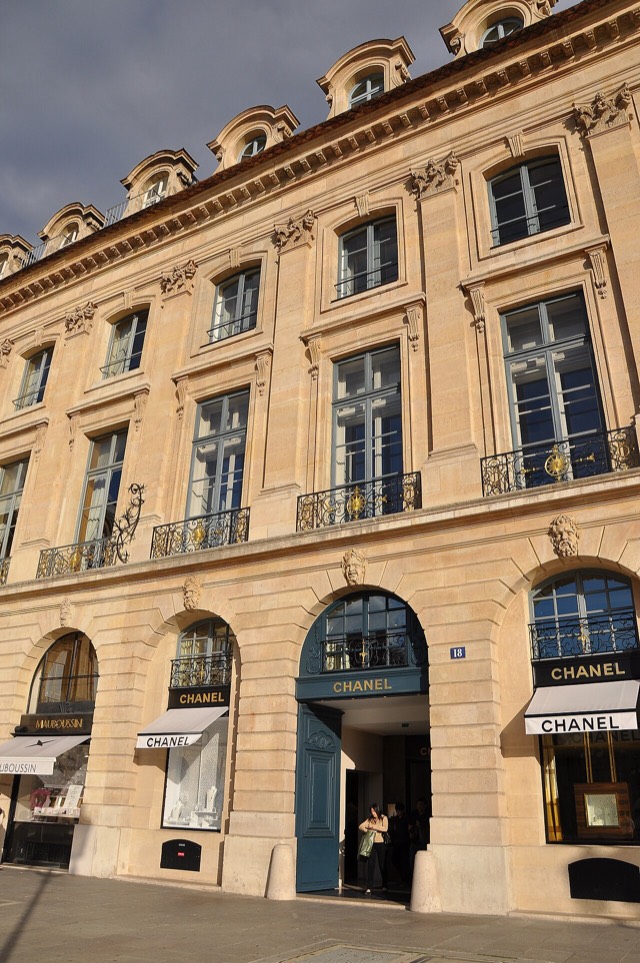
Chanel is a French luxury fashion house founded in 1910 by Gabrielle “Coco” Chanel. It built its empire on the little black dress, the No. 5 perfume, the quilted 2.55 handbag, and a brand philosophy that weaponized simplicity against the excess of its era. Today it is privately held by the Wertheimer family and consistently ranks among the world’s most valuable luxury brands, with revenues exceeding $17 billion annually as of recent reports.

People search for Chanel obsessively for two very different reasons: aspiration and skepticism. Some want to know if a bag is worth a down payment on a car. Others want to know if the whole thing is an elaborate pricing illusion. Both are legitimate questions, and Chanel’s own marketing answers neither of them honestly.

The brand has raised its prices aggressively, multiple times per year in some recent periods, outpacing inflation by a mile and citing “raw material costs” and “craftsmanship.” Critics point out that those justifications conveniently align with making the bags less accessible to the merely affluent and more exclusive to the genuinely rich. Chanel’s price hikes are a deliberate exclusivity strategy, and the brand knows it.

Beyond bags and perfume, “Chanel” has taken on a life of its own as a given name, a slang term, and a cultural shorthand for a particular brand of aspirational femininity. That cultural weight is as much a part of the brand’s power as any stitching or bottle of No. 5.

People also ask

Chanel is expensive because it is engineered to be. The brand uses high-quality materials, lambskin, caviar leather, gold-plated hardware, and employs skilled artisans, largely in French ateliers. But the honest answer goes further: Chanel has systematically raised prices far beyond cost increases to maintain an aura of exclusivity that competitors can't easily replicate. You're paying for the mythology as much as the merchandise.

Chanel is expensive because scarcity and prestige are its actual product. The house controls its own supply chain, limits distribution to its own boutiques, and refuses to sell on third-party platforms. On top of genuine craftsmanship costs, this deliberate artificial scarcity inflates prices and ensures that owning Chanel signals something money alone can't easily buy, at least until the price keeps climbing and resets that threshold.

Chanel bags are expensive for three layered reasons: real craft, calculated scarcity, and relentless price hikes. The Classic Flap and 2.55 are made in France with premium leather and hand-finished hardware, and that costs real money. But Chanel has also raised bag prices by over 100% between 2019 and 2024, which no leather or labor cost justifies. The bag is now explicitly a luxury investment prop, and the price reflects that positioning.

Chanel perfumes use high-grade ingredients, Grasse roses, jasmine, and proprietary blends, developed with in-house perfumers, which is genuinely costly. But the price also carries decades of brand storytelling: No. 5 became the world's best-known fragrance partly because Marilyn Monroe famously said she wore nothing else to bed. You are paying for the juice and for that story in equal measure.

Chanel is expensive because it decided to be, and it has the brand equity to get away with it. The house competes not with other fashion brands but with rare art and fine jewelry in the mind of its core customer. Price is the moat, the higher it goes, the more exclusive the signal, and the more people who can't afford it still covet it.

Beyond craftsmanship, Chanel bags are expensive because the brand has positioned them as stores of value. Resale prices on the secondary market frequently exceed retail, which has turned the Classic Flap into a quasi-financial asset. Chanel actively benefits from this dynamic, it justifies higher retail prices and creates frenzied demand that keeps waiting lists real and the brand untouchable.

Sort of, it depends entirely on what you're buying and why. A Classic Flap or 2.55 in caviar leather has historically held or appreciated in resale value, making it defensible as a luxury purchase with staying power. A seasonal piece, a perfume, or a cosmetic product? You're paying a steep brand premium with no resale upside. Worth is personal, but don't let anyone sell you a lipstick as an investment.

Chanel's core buyer has traditionally been women aged 35–55 with high disposable income, but the brand has been deliberately targeting younger affluent consumers, particularly millennials and Gen Z, since the mid-2010s. Its social media presence and collaborations are designed to seed aspiration early, with the expectation that today's 25-year-old dreamer becomes tomorrow's 40-year-old buyer. The actual purchase still skews older and wealthier than the Instagram audience.

The most reliable tells on a fake Chanel bag are stitching consistency, hardware weight, and interior details. Authentic Chanel has perfectly even, dense stitching (typically 10 stitches per inch on classic bags), heavy gold-tone hardware that doesn't feel hollow, and a cleanly embossed authenticity card with matching serial number inside the bag. The interlocking CC logo should be symmetrical, the left C overlaps the top of the right C, and the right C overlaps the bottom of the left. If the font, the alignment, or the leather smell feels off, trust your instincts.

The most affordable entry points into new Chanel are cosmetics and fragrance: a Chanel lipstick runs around $45–$55, and a small bottle of No. 5 Eau de Toilette starts around $100–$130. For ready-to-wear or accessories, prices climb fast. The brand intentionally keeps its floor high enough that even the cheapest item feels like a considered luxury purchase.

A 50ml bottle of Chanel No. 5 Eau de Parfum retails for approximately $142–$155 at official Chanel boutiques and counters. The Les Exclusifs and Les Eaux de Chanel lines range from roughly $180 to over $300 depending on size and concentration. Prices shift slightly by region and retailer, but Chanel tightly controls its fragrance pricing.

As of 2024–2025, the Chanel Classic Flap in medium size retails for approximately $10,800 in the US, while the iconic 2.55 Reissue sits at a similar price point. Mini and small versions start around $4,500–$6,500. Exotic skin versions can exceed $30,000. Chanel has raised these prices multiple times since 2020, and there is no credible sign it will stop.

The Chanel 25, the Classic Flap in size 25cm (the smallest of the classic sizes), retails for approximately $8,800–$9,500 in the US as of recent pricing. Exact figures shift with Chanel's frequent price adjustments, so always verify at the boutique directly. On the resale market, high-condition pieces can command prices at or above retail.

The Chanel 25 Classic Flap is priced in the range of $8,800–$9,500 at retail in the US. It is the most compact of the standard Classic Flap sizes and often the first choice for buyers who want the iconic silhouette without the bulk. Despite its smaller size, it is not meaningfully cheaper than its larger siblings, Chanel does not discount for downsizing.

As a brand, Chanel is rarely abbreviated, its mononym status means it needs no nickname. As a given name, common nicknames include Nell, Nellie, Chan, Shani, and Ellie. In streetwear and sneaker culture, Chanel sometimes gets called "the double C" after its logo. In fragrance circles, No. 5 is simply called "Five" by insiders who consider anything more a mouthful.

Yes, in the hierarchy of global luxury, Hermès sits above Chanel by most measures. Hermès has a higher brand valuation, stricter production limits, and a waiting list culture (especially for Birkins and Kellys) that Chanel cannot match. Hermès also runs on tighter margins and more controlled scarcity. Chanel is elite; Hermès is the tier that tells Chanel "nice bag" and moves on.

Princess Diana distanced herself from Chanel after her separation from Prince Charles in 1992, reportedly because the CC (Chanel) logo was seen as an awkward visual reminder of Camilla Shand's initials, CC standing for Camilla and Charles in public perception. Diana pivoted visibly to Versace, Catherine Walker, and other designers. This is widely reported by royal biographers and fashion historians, though Diana never made a formal public statement confirming the exact reason.

In African-American Vernacular English and broader urban slang, "Chanel" is sometimes used as a byword for high-class femininity or as a compliment meaning someone carries themselves with luxury-level elegance. It also appears in rap lyrics as a status shorthand, in the same breath as other luxury brands. Separately, "Chanel" as a verb ("she Chaneled the whole look") occasionally surfaces on fashion social media to mean elevating an outfit to effortless chicness.

Globally, "Sophia" (and its variants, Sofia, Sofía) consistently ranks as one of the most popular girl names across multiple countries and naming databases. "Olivia" and "Emma" have also topped charts in the US, UK, and Australia in recent years. No single name is universally #1 due to cultural and regional variation, but Sophia has the broadest cross-border claim to the top spot.

Names that flow well with Chanel tend to be either short and crisp, Chanel Mae, Chanel Rose, Chanel Eve, or classically elegant to balance the brand weight: Chanel Isabelle, Chanel Renée, Chanel Élise. Single-syllable middle names prevent the full name from becoming a runway announcement. Avoid heavy-consonant names that clash with the soft "sh" opening sound of Chanel.

Related topics
Culture Trending now
Taylor Swift and Travis Kelce Wedding 2026
Culture Trending now
Why Labubu is suddenly everywhere
Culture Trending now
The Odyssey (Christopher Nolan)
Culture Trending now
KPop Demon Hunters
Culture Trending now
House of the Dragon Season 3
Culture People
Adam Curry
Culture People
Adam Sandler
Culture People
Andrew Huberman