← BRANDS
datastats / Culture
LIVE
Culture

Cartier

Cartier sells you a name as much as a watch or a bracelet, and for 175 years, the world has kept paying for it.
By · datastats · Updated June 4, 2026
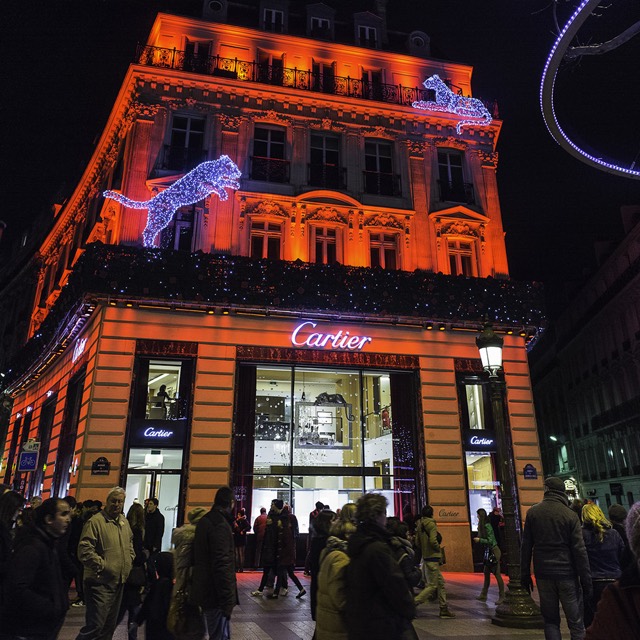
Cartier
Jakub Szypulka · CC BY-SA 3.0

Cartier is a French luxury maison founded in Paris in 1847 by Louis-François Cartier. It built its reputation dressing royalty, literally: King Edward VII called it “the jeweller of kings and the king of jewellers”, and it has never let the world forget it. Today it sells watches, fine jewellery, leather goods, and eyewear at prices that range from aspirational to eye-watering.

The brand sits inside Richemont, the Swiss luxury conglomerate that also owns IWC, Jaeger-LeCoultre, and Van Cleef & Arpels. That corporate parent funds the R&D, the boutique network, and the marketing machine that keeps Cartier’s name at the top of every “most coveted” list. It is not an independent atelier; it is a global business optimised for prestige and margin.

People search Cartier obsessively because the price tags demand justification. A Love bracelet starts around $2,000 and can easily exceed $20,000 in gold and diamonds. Entry-level Tank watches open near $3,000 and climb to six figures for complications. When you’re considering that kind of spend, you do your homework, and you want answers the brand’s own boutique staff are trained to deflect.

That gap between the polished sales pitch and the real story, markups, resale values, manufacturing realities, counterfeits, is exactly what this page fills. Cartier is genuinely excellent in many ways. It is also genuinely expensive in ways that go beyond craftsmanship. Both things are true, and you deserve to know both.

People also ask

Three forces drive the price: materials (high-karat gold, certified diamonds, fine gemstones), the Cartier name itself, which functions as a luxury tax on top of raw costs, and Richemont's margin requirements as a publicly traded conglomerate. Craftsmanship is real, but brand equity does a lot of the heavy lifting. You are paying for the red box almost as much as what's inside it.

Precious metals, gem quality, in-house or contracted Swiss movements, global boutique operations, and decades of deliberate scarcity signaling all stack up. But the single biggest driver is Cartier's cultivated status, the brand commands a premium that a functionally identical piece from a lesser-known house simply cannot. Marketing, heritage, and celebrity placement are baked into every price tag.

Because it can be, and because buyers accept it. Cartier has maintained desirability long enough that the price itself becomes part of the appeal, a signal to the buyer and to everyone who recognizes the piece. The material cost of a gold Love bracelet is a fraction of the retail price; the rest is brand architecture, distribution costs, and pure prestige margin.

Cartier watches are priced as jewellery first and timepieces second, that's not an insult, it's their actual positioning. The cases are often 18k gold, the dials hand-finished, and many now use in-house movements developed at their La Chaux-de-Fonds facilities. Add Richemont's retail infrastructure and the Cartier heritage premium, and you're looking at prices that rival far more technically complex Swiss watches from pure watchmaking houses.

The Love and Juste un Clou bracelets are made from 18k gold, yellow, white, or rose, and precious metal alone is costly at current spot prices. But the real multiplier is icon status: these are among the most recognized pieces of jewellery on earth, and Cartier prices that recognition accordingly. The diamond-set versions add another layer of cost through stone selection and setting labor.

Cartier eyewear sits at the ultra-premium end of a market where margins are already high. The frames are often crafted in gold-plated or solid precious metal, with hand-fitted lenses and meticulous finishing, the Vendôme and Première lines are essentially jewellery you wear on your face. That said, you're also paying for the pantherhead logo and the cachet of a maison that has dressed royals for over a century.

The Tank was designed in 1917, inspired by the Renault tanks of WWI, and it has been worn by everyone from Jackie Kennedy to Princess Diana to Andy Warhol. That cultural pedigree is irreplaceable and Cartier prices it as such. Mechanically, finer Tank references now house Cartier's own calibres; even quartz versions are priced on the strength of the design's century-long icon status.

Cartier sources high-grade gemstones, employs skilled Parisian and workshop-based setters, and backs every piece with the weight of 175 years of royal patronage and cultural cachet. The craftsmanship benchmark is genuinely high, but so is the brand tax. A comparable stone in a comparable setting from a non-luxury house would cost significantly less; the Cartier name is its own line item.

The Crash is one of the most surreal watch designs ever produced, its melted, asymmetric case born (allegedly) from a 1967 car accident involving a Baignoire watch. Limited production runs, cult collector status, and near-mythological origin story make it far rarer than most Cartier references. On the secondary market, vintage Crashes routinely fetch multiples of their original retail price, and Cartier knows it.

Cartier uses 18k gold (75% pure gold content) across virtually all its fine jewellery and watch cases, not gold-filled or gold-plated. At current gold prices, the raw material cost is substantial before a single craftsperson touches it. Layer on production, quality control, and the Cartier margin, and the final price reflects both genuine material value and a significant prestige surcharge.

Cartier is owned by Compagnie Financière Richemont SA, the Swiss luxury group controlled by South African billionaire Johann Rupert. Richemont acquired the maison as part of assembling its portfolio of haute horlogerie and jewellery brands. Cartier is Richemont's single largest revenue contributor, consistently accounting for roughly a third of the group's total sales.

Sort of, it depends entirely on what you're buying and why. The Love bracelet and Tank watch hold resale value better than most luxury goods and are genuine cultural artifacts. But you are paying a steep premium for that privilege, and other watches at the same price point offer superior mechanical complexity. If you want status, staying power, and recognizability, Cartier delivers. If you want horological value for money, look elsewhere.

Yes, for specific references, no, as a blanket rule. The Santos, Tank Louis Cartier, and Crash have proven long-term desirability and hold or appreciate in value. Mid-tier quartz Cartier watches are lovely objects but depreciate more sharply and face stiff competition from the pre-owned market. Buy the icon references in precious metal if resale matters to you; avoid the entry-level steel quartz pieces if you're treating it as an investment.

Start with the crown: authentic Cartier watches have a cabochon-set synthetic sapphire crown, fakes either omit it or use cheap plastic. Check the caseback engraving for crisp, deep lettering (fakes are often shallow and uneven), and examine the dial text under magnification, Cartier's printing is razor-sharp. The movement, if visible, should be clean and decorated; most fakes use generic Asian movements that don't match Cartier's finishing. When in doubt, purchase only from Cartier boutiques, authorized retailers, or reputable pre-owned specialists with authentication guarantees.

Cartier manufactures its watches primarily at its facilities in La Chaux-de-Fonds and Geneva, Switzerland. The brand developed its own in-house movement division, producing calibres like the 1847 MC and the Calibre de Cartier movement family, though it also sources movements from sister Richemont brands and ETA for certain lines. Design is developed in Paris; Swiss watchmaking execution is the backbone.

The core automatic lineup includes the Santos de Cartier (Calibre 1847 MC or the micro-rotor 1611 MC), the Calibre de Cartier, the Drive de Cartier, the Rotonde de Cartier, and several Ballon Bleu references. The Cartier Clé also runs automatic. These are the references where Cartier leans hardest into in-house movements, a meaningful step up from the brand's historically quartz-heavy catalogue.

For maximum icon status and resale resilience, the Tank Louis Cartier in 18k yellow gold is the purest expression of the original 1917 design. On a tighter budget, the Tank Solo in steel is a clean, wearable entry point, though it uses a quartz movement. Watch enthusiasts who want mechanical credibility should look at the Tank Louis Cartier with the manually-wound in-house calibre. Avoid limited editions bought purely for speculation, the classics outlast the hype every time.

The Tank Louis Cartier in gold, the Santos de Cartier, and the Crash are the strongest performers on the secondary market. Limited production Crashes in particular have been known to appreciate substantially above retail. Precious metal cases always retain more value than steel, and mechanical movements add credibility that quartz cannot match at resale. The Love watch in gold is also a consistent performer in the pre-owned jewellery watch segment.

The flagship Love and Juste un Clou bracelets are made from 18k gold, available in yellow, white, and rose gold, with or without diamond pavé settings. Cartier does not produce these iconic designs in silver or base metal; the entry price reflects genuine precious metal content. Some limited collections use platinum. The Love bracelet also features a screwhead motif and originally came with a miniature screwdriver, a deliberate design statement about permanence.

Cartier sits at a rare intersection: it is simultaneously a legitimate craft house with 175 years of design innovation and one of the most powerful luxury marketing machines on the planet. It invented the modern wristwatch concept (the Santos, made for aviator Alberto Santos-Dumont in 1904), shaped the language of fine jewellery with the white gold and platinum settings it pioneered, and created cultural touchstones, the Tank, the Love bracelet, the Panthère, that transcend fashion cycles. The brand's real superpower is longevity: it keeps converting new generations without abandoning the ones that made it.

Related topics
Culture Trending now
Taylor Swift and Travis Kelce Wedding 2026
Culture Trending now
Why Labubu is suddenly everywhere
Culture Trending now
The Odyssey (Christopher Nolan)
Culture Trending now
KPop Demon Hunters
Culture Trending now
House of the Dragon Season 3
Culture People
Adam Curry
Culture People
Adam Sandler
Culture People
Andrew Huberman