← BRANDS
datastats / Money
LIVE
Money

BYD

BYD went from a battery maker to the company that out-sells Tesla in electric vehicles, and the symbol of China's rise in the car industry.
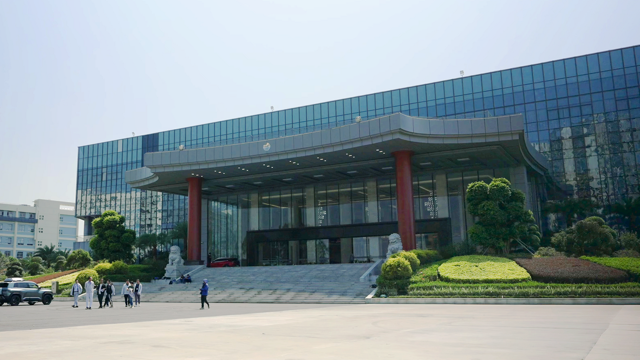
By · datastats · Updated June 13, 2026
BYD
iMoD Official · CC BY 3.0

BYD is the company that turned China’s electric-vehicle ambitions into a global reality. Founded in 1995 by Wang Chuanfu as a battery manufacturer, it expanded into cars and became, by some measures, the world’s biggest seller of electrified vehicles, a remarkable rise built on owning the battery supply chain that most carmakers depend on others for.

People search for BYD as it arrives in their market and as headlines pit it against Tesla. They want the basics: what the company is, who owns it, whether the cars are any good, why they are so affordable, and where they can actually buy one. The answers below stick to widely reported facts about the company and its vehicles; nothing here is financial or purchasing advice, and availability, pricing and model quality vary significantly by region and over time.

People also ask

BYD (the initials stand for 'Build Your Dreams') is a Chinese company founded in 1995 that started by making rechargeable batteries and grew into one of the world's largest makers of electric and plug-in hybrid vehicles. Crucially, BYD also makes its own batteries, including its well-known Blade battery, which gives it control over the single most expensive part of an EV. It sells cars, buses, and batteries globally, and is the company most associated with China's surge in the EV market.

It depends what you mean by better. By raw volume, BYD has at times sold more electrified vehicles than Tesla, helped by a huge, affordable range and its home market in China. Tesla still leads on software, charging network, and brand prestige in the West, and focuses purely on battery-electric cars while BYD also sells plug-in hybrids. So BYD often wins on price, range of models, and scale; Tesla on technology ecosystem and brand. Neither is simply 'better', they compete on different strengths.

BYD is a publicly traded company, listed in Hong Kong and Shenzhen. Its co-founder and chairman, Wang Chuanfu, remains the largest individual shareholder and the driving force behind the company. The most famous outside investor is Warren Buffett's Berkshire Hathaway, which bought a stake in 2008, an early bet that drew global attention to BYD, though Berkshire has been gradually reducing that holding in recent years.

Reviews have improved markedly as BYD has expanded internationally. Its newer models are generally praised for value, strong battery range, and the safety reputation of its Blade battery design, while criticism tends to focus on software polish and interior details compared with premium rivals. As a relatively new brand in Western markets, its long-term reliability record there is still being established, but its scale and battery expertise are real strengths. This is general information, not buying advice.

Vertical integration and scale. BYD makes its own batteries, chips, and many components in-house, which removes supplier margins and protects it from shortages, a big cost advantage over rivals that buy batteries from third parties. Add enormous manufacturing scale, lower production costs in China, and government support for the EV industry, and BYD can price aggressively while staying profitable. It is less 'cheap' in the sense of low quality and more 'low cost' by design.

Primarily in China, where BYD has massive manufacturing capacity. As it expands globally it is building plants abroad, including in Hungary and Turkey for Europe, Brazil for Latin America, and Southeast Asia, partly to serve local markets and navigate tariffs on Chinese-made cars. So a BYD sold in Europe in the future may increasingly be built closer to where it is sold.

In Europe, yes and growing fast, BYD sells passenger EVs across many European countries and is investing in local production. In the United States, BYD does not sell passenger cars to consumers; steep tariffs on Chinese EVs and political tension have effectively kept its cars out of the US retail market, although BYD does build electric buses in America. So the answer is very different depending on the region.

Berkshire Hathaway, Buffett's company, bought a roughly 10% stake in BYD in 2008 on the recommendation of his partner Charlie Munger, a hugely profitable early investment that helped put BYD on the global map. In recent years Berkshire has been steadily selling down that position, so its holding is now much smaller than at its peak. Buffett personally does not own BYD outside of Berkshire's stake.

Related topics
Money Trending now
Richest people in the world 2026
Money Trending now
How to cancel Amazon Prime
Money Trending now
Coinbase vs Binance
Money Trending now
How to cancel Adobe Creative Cloud
Money Trending now
Compound interest
Money People
Bernard Arnault
Money People
Mark Cuban
Money People
Mukesh Ambani