← BRANDS
datastats / Money
LIVE
Money

BMW

BMW sells you a dream of German engineering, then hands you a maintenance bill that makes the sticker price look like a down payment.
By · datastats · Updated June 4, 2026
BMW
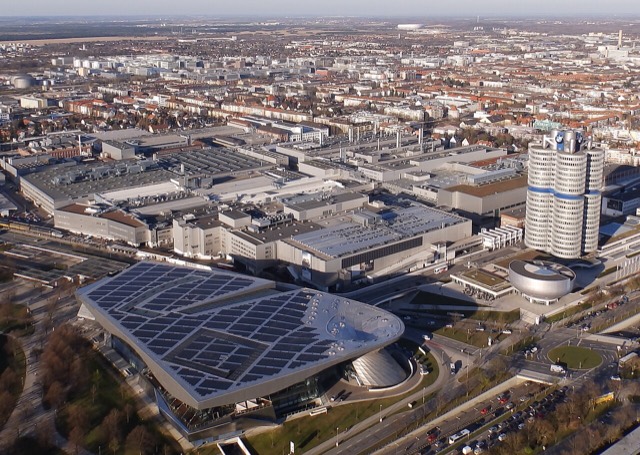
M(e)ister Eiskalt · CC BY-SA 3.0

BMW, Bayerische Motoren Werke, is a Munich-based automaker founded in 1916, originally building aircraft engines before pivoting to motorcycles and then cars. Today it’s one of the most recognized luxury automotive brands on the planet, sitting comfortably alongside Mercedes-Benz and Audi in the so-called German Big Three.

People search for BMW in the money category for one very specific reason: the gap between what it costs to buy a BMW and what it costs to own one is enormous, and the brand’s marketing does absolutely nothing to prepare you for it. Repair costs, premium parts, and complex electronics turn what looks like an aspirational purchase into a recurring financial commitment.

The brand also carries serious cultural weight, the M series, the 3 Series, the i8, which fuels constant curiosity about reliability, ownership demographics, theft rates, and resale value. BMW occupies that peculiar zone where it’s simultaneously a status symbol, a driver’s car, and a cautionary tale about depreciation.

On the corporate side, BMW’s ownership structure surprises many people. The Quandt family, largely invisible to the public, controls the company, a fact BMW’s glossy ads will never mention. Understanding who actually holds the keys to BMW AG matters if you’re thinking about the brand beyond just the dealership experience.

People also ask

Yes, bluntly, yes. BMW consistently ranks among the most expensive mainstream brands to maintain, with studies from outlets like Consumer Reports and YourMechanic placing average annual repair costs well above the industry average, often $1,000–$1,700 per year depending on model and age. Proprietary parts, complex electronics, and labor-intensive designs are the culprits. The sweet spot of pain hits hardest once the warranty expires, usually around year four or five.

BMW prices in premium engineering, brand prestige, and genuinely advanced technology, the inline-six engines, the xDrive all-wheel-drive system, and the M division's motorsport pedigree all cost real money to develop. On top of that, BMW deliberately positions itself as a luxury brand, which means pricing is partly about exclusivity signaling, not just cost of production. The German manufacturing base and strong Euro-denominated supply chain also push prices up for international markets. Put simply: you're paying for the badge as much as the bolts.

No. BMW and Volkswagen Group are completely separate, publicly traded companies, rivals, not relatives. This is one of the most common mix-ups in automotive brand trivia, probably because both are German giants. Volkswagen Group owns Audi, Porsche, Lamborghini, Bentley, and others, but BMW AG is its own independent entity, majority-controlled by the Quandt family.

The Quandt family, specifically siblings Stefan Quandt and Susanne Klatten, collectively hold roughly 46–49% of BMW AG's voting shares, making them the dominant controlling shareholders. Susanne Klatten alone is one of the wealthiest people in Germany. The family inherited their stake through Herbert Quandt, who rescued BMW from near-bankruptcy in 1959, a piece of corporate history BMW's brand story conveniently glosses over.

The 3 Series (particularly the E90 generation, 2006–2011 with the N52 engine) and the X3 are consistently cited by long-term owners and mechanics as the most dependable BMWs. Avoid anything with the N54 or N63 turbocharged engines if reliability is your priority, those are notorious money pits. Older, simpler BMWs with naturally aspirated engines age far more gracefully than the modern turbocharged, tech-laden variants.

The BMW M3 GTR was banned from the American Le Mans Series (ALMS) after the 2001 season because it was so dominant it essentially destroyed competitive racing. BMW homologated the car with a V8 engine specifically for racing, but the rules required production-based engines, and BMW's 'production' version was barely road-legal and produced in tiny numbers purely to satisfy regulations. Rival teams protested, the rules were tightened, and the GTR was squeezed out. It remains one of motorsport's most brazen, and brilliant, regulatory exploits.

The nickname 'Beamer' (or 'Bimmer' for cars) has murky origins, but the most widely accepted explanation traces it to British slang that emerged in the 1970s when BMW motorcycles were common among British riders, and BSA motorcycles were already nicknamed 'Beesers.' BMW riders adopted a similar phonetic nickname. Worth noting: purists insist 'Bimmer' is correct for BMW cars, while 'Beamer' technically refers to BMW motorcycles, but that distinction lost the battle with popular culture decades ago.

In relative terms, BMWs can look cheap when you're comparing a used, high-mileage 3 Series to a new Toyota, but that's the depreciation trap doing its work. BMWs shed value aggressively, sometimes losing 50–60% of their value in the first three years. That makes the purchase price look attractive on the used market while hiding the maintenance costs waiting underneath. A 'cheap' used BMW is often cheap for a reason.

BMW stands for Bayerische Motoren Werke, which translates from German to 'Bavarian Motor Works.' The company was founded in Munich, Bavaria, in 1916, initially manufacturing aircraft engines, which is also the origin story behind the blue-and-white roundel logo, commonly said to represent a spinning propeller against a blue Bavarian sky (though BMW has acknowledged that interpretation came after the logo was designed).

At 50, the smart money goes on something that delivers driving enjoyment without punishing running costs, think BMW 5 Series, Lexus ES, or Porsche Macan if budget allows. Comfort, tech, and reliability matter more at this stage than chasing a sports car ego trip. If the budget is wide open, a lightly used Porsche 911 is the culturally accepted midlife milestone that actually holds its value, unlike most BMWs.

The Ford F-Series pickup truck, specifically the F-150, has been the best-selling vehicle in the United States for over 40 consecutive years. It's not even close; Ford routinely sells 700,000–800,000 F-Series trucks annually. BMW doesn't crack the top ten in overall U.S. sales volume, though it regularly leads the luxury segment.

BMW is German, headquartered in Munich, Bavaria, Germany, where it was founded in 1916. That said, BMW operates a significant manufacturing plant in Spartanburg, South Carolina, which is actually the company's largest single production facility in the world by volume and exports BMWs globally. So while the brand and its DNA are thoroughly German, a large chunk of the SUVs you see on American roads were built in the American South.

Yellow, gold, and bright green cars are statistically among the least stolen, they're rare, highly visible, and extremely difficult to resell or strip for parts without drawing attention. Data from insurance and law enforcement reports consistently shows that common colors like white, black, and silver dominate theft statistics simply because they're ubiquitous and easy to move. Driving a lime-green BMW is your anti-theft device.

The title is fiercely contested, but the Yugo GV, a Serbian-built subcompact sold in the U.S. in the 1980s for as little as $3,990, is the near-universal consensus pick among automotive historians and journalists. It was unreliable, unsafe, and flimsy enough that strong winds on bridges were a documented hazard. Time magazine named it one of the worst cars ever made. The Ford Pinto and the Reliant Robin are honorable mentions in the hall of shame.

Several models are confirmed for discontinuation around 2025–2026 as automakers restructure around EVs and shifting demand: the BMW i8 is already gone, and various combustion variants across multiple brands are being phased out as EV mandates tighten in Europe and California. Specific casualty lists shift as manufacturers adjust plans, but compact sedans and low-volume sports cars are the most vulnerable segment industrywide. Always verify with the manufacturer directly, as production decisions change quickly.

Survey after survey, including studies by insurance and dating platforms, puts the Porsche 911 at or near the top for perceived male attractiveness, followed closely by classic muscle cars like the Ford Mustang and the Chevrolet Corvette. BMWs score well too, particularly the M3 and M4. The honest conclusion from the data: a well-maintained, driver-focused sports car outperforms an ostentatious luxury SUV every time in terms of genuine appeal.

Seniors skew heavily toward Toyota (Camry, RAV4), Honda (CR-V, Accord), and Subaru (Outback, Forester), brands with strong reliability reputations, comfortable rides, and easy ingress and egress. Cadillac and Lincoln still punch above their market-share weight in the 65+ demographic. BMW is less dominant here; the brand's maintenance complexity and sport-tuned suspensions don't always appeal to buyers prioritizing long-term practicality over driving dynamics.

The Porsche 944, and to some extent the 924, earned that nickname, and so did the Mazda MX-5 Miata in a more flattering context. In the modern era, the Toyota GR86 / Subaru BRZ and even the BMW Z4 have been tagged with versions of this label. The Volkswagen Golf GTI has also worn the badge proudly. The label is meant to sting but usually ends up as a compliment, these cars often deliver 80% of the Porsche experience at 30% of the cost.

Black is the undisputed answer, it shows every water spot, swirl mark, dust particle, and scratch with brutal honesty. Detailers universally agree it requires the most upkeep to look presentable. Dark navy and dark red are close seconds. BMW's popular Black Sapphire Metallic looks stunning at the dealership and becomes a full-time job to keep that way in real-world ownership.

Modern vehicles with advanced immobilizer systems, GPS tracking, and complex encrypted key fobs are genuinely difficult to steal without the physical key. The Tesla Model S has ranked among the hardest to steal in multiple studies due to its PIN-to-drive feature, over-the-air updates, and real-time GPS tracking. Older BMWs, ironically, were famously vulnerable to relay attacks on their keyless entry systems, BMW and other manufacturers have since patched those vulnerabilities, but it underscores that 'German engineering' is not a synonym for 'theft-proof.'

Related topics
Money Trending now
Richest people in the world 2026
Money Trending now
How to cancel Amazon Prime
Money Trending now
Coinbase vs Binance
Money Trending now
How to cancel Adobe Creative Cloud
Money Trending now
Compound interest
Money People
Bernard Arnault
Money People
Mark Cuban
Money People
Mukesh Ambani