Skip to content
datastats

Alibaba

Alibaba is the world's largest B2B marketplace — and also one of the easiest places to lose money if you don't know exactly what you're doing.
Updated: June 4, 2026

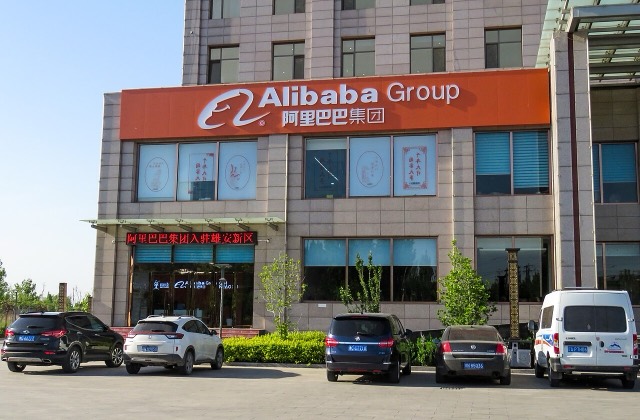
Alibaba Group is a Chinese multinational founded by Jack Ma in 1999, built around the idea of connecting manufacturers — overwhelmingly based in China — directly with buyers worldwide. Its flagship platforms include Alibaba.com (bulk B2B trade), AliExpress (retail for individual consumers), Taobao, Tmall, and a sprawling logistics and fintech empire underneath. By gross merchandise volume, it consistently ranks among the largest commerce companies on earth.

The money angle is what drives most of the hard questions: people want to know whether they can genuinely save by cutting out the middleman, or whether they’ll be burned by counterfeit goods, vanishing sellers, or surprise import duties. Those fears are not unfounded — Alibaba operates as a marketplace, not a retailer, meaning the company itself rarely controls what individual suppliers list, how they behave, or what actually ships.

Regulators have noticed. The U.S. Trade Representative placed Alibaba’s Taobao marketplace on its “Notorious Markets” list for years due to counterfeit concerns. China’s own regulators fined Alibaba a record $2.8 billion in 2021 for antitrust violations. These are documented facts the company’s own press releases don’t lead with.

That said, Alibaba.com and AliExpress remain genuinely useful tools for the right buyer — a sourcing agent, a small business owner ordering in bulk, or a bargain hunter willing to wait weeks for delivery. The platform is not a scam in itself; but it is an open marketplace where scams absolutely exist, and the due-diligence burden falls almost entirely on the buyer.

People also ask

Is AliExpress owned by Alibaba?#
Yes. AliExpress is a wholly owned subsidiary of Alibaba Group, launched in 2010 specifically to let overseas consumers buy directly from Chinese manufacturers and merchants in small quantities. Same parent company, very different business model from Alibaba.com.
Which is safer, AliExpress or Alibaba?#
For individual consumers, AliExpress is safer — it has a built-in buyer-protection program, dispute resolution, and you're buying retail quantities with your credit card. Alibaba.com is a B2B sourcing platform where you're wiring large sums to suppliers, often before any goods ship, with far less standardized protection. If you don't know how to vet a supplier and negotiate payment terms, Alibaba.com is the riskier arena by a wide margin.
Which is cheaper, AliExpress or Alibaba?#
Alibaba.com is cheaper per unit — that's the whole point. You're buying at factory or wholesale prices, but only if you meet minimum order quantities (MOQs) that often run into the hundreds or thousands of units. AliExpress charges retail-style prices with no MOQ. So AliExpress is cheaper for a single item; Alibaba.com is cheaper per piece only when you're buying in bulk.
Why should I not order from AliExpress?#
Here's the honest list: shipping can take 2–8 weeks, product quality is wildly inconsistent, counterfeit or mislabeled goods are a documented problem, and customer service is slow. Import duties and taxes can erase the apparent savings entirely. If you need something fast, guaranteed to specification, or from a brand-name manufacturer, AliExpress is the wrong tool.
What is the difference between Alibaba and AliExpress?#
Alibaba.com is a B2B wholesale platform — you negotiate with factories, order large quantities, and arrange freight shipping. AliExpress is a B2C retail marketplace where anyone can buy a single item with standard checkout. Different audiences, different price structures, different risk profiles, and different buyer protections — they just share a parent company.
Why alibaba shipping is so expensive?#
Because on Alibaba.com you're shipping commercial freight — pallets, containers, or large cartons — not small parcels. Ocean freight, air freight, customs brokerage, and inland logistics add up fast. You're also usually responsible for arranging your own freight forwarder, and the quoted FOB or EXW prices from suppliers don't include any of that. The cost surprises newcomers because they forget they're operating in a wholesale supply-chain world, not a consumer shopping app.
Why alibaba is expensive?#
Alibaba.com itself isn't expensive — the confusion usually comes from hidden costs: shipping freight, import duties, quality inspection fees, and payment processing. When buyers calculate all-in landed cost rather than just the factory price, the 'cheap Chinese goods' narrative collapses quickly, especially for smaller orders that don't justify the logistics overhead.
Is alibaba and aliexpress the same?#
No. They share the same parent company, Alibaba Group, but they are completely different platforms targeting different buyers. Alibaba.com is for businesses sourcing in bulk; AliExpress is for retail consumers buying single items. Using them interchangeably is a costly mistake.
Is it safe to buy from Alibaba?#
Sort of — it depends entirely on how much due diligence you do. The platform itself is legitimate, but because it's an open marketplace with thousands of independent suppliers, fraud, misrepresentation, and quality failures are real risks. Buyers who verify suppliers, use Trade Assurance, pay via secure methods, and order samples first can buy safely. Those who wire money to an unvetted supplier on faith alone frequently get burned.
Is Alibaba 100% legit?#
No marketplace on earth is 100% legit, and Alibaba.com is no exception. The platform is a real, publicly traded company (NYSE: BABA) — that part is legit. But it hosts millions of third-party suppliers, and among them are fraudulent listings, counterfeit goods, and bait-and-switch operators. Alibaba's own Trade Assurance program exists precisely because the problem is real enough to require a formal remedy.
Is alibaba safe to buy from?#
Yes, with serious caveats. Stick to verified suppliers with substantial transaction history, use Alibaba's Trade Assurance payment protection, always order samples before committing to bulk, and never pay via wire transfer to an unknown party. Follow those steps and the risk is manageable. Skip them and you're gambling.
Is alibaba legit and safe?#
Alibaba Group as a company is legitimate — it's publicly listed, heavily regulated, and processes billions in annual trade. The platform is safe to use as a tool. What isn't guaranteed is the legitimacy of every individual supplier listed on it. The distinction matters: the store is real; not every vendor in it is trustworthy.
Is alibaba a legit site?#
Yes. Alibaba.com is a legitimate, operational e-commerce and sourcing platform owned by Alibaba Group Holding Ltd., a company listed on the New York Stock Exchange and the Hong Kong Stock Exchange. It is not a scam website. However, it is a marketplace where scam sellers can and do operate — a very important distinction.
Is Alibaba owned by China?#
Not exactly. Alibaba Group is a private company founded in China, incorporated in the Cayman Islands, and listed on U.S. and Hong Kong stock exchanges with a global shareholder base. The Chinese government does not own it. However, Chinese regulators exert significant influence over it — including a record $2.8 billion antitrust fine in 2021 — and a state-backed entity acquired a small 'golden share' stake in two of Alibaba's subsidiaries in 2021, giving the government certain governance rights.
What are the disadvantages of Alibaba?#
The main ones: high minimum order quantities that lock up cash, long lead times, expensive and complex freight logistics, real risk of supplier fraud or quality misrepresentation, limited recourse once goods ship if you didn't use Trade Assurance, potential counterfeit or IP-infringing products, and the steep learning curve of international trade compliance. It's a powerful tool that punishes the inexperienced.
Are there fake sellers on Alibaba?#
Yes, unambiguously. Alibaba itself acknowledges this and has invested heavily in verification programs to combat it. Fake or fraudulent sellers use tactics like hijacking legitimate supplier profiles, sending high-quality samples then shipping inferior bulk goods, and requesting payment outside the platform to avoid Trade Assurance. It's a known, persistent problem on the platform.
How can I avoid being scammed on Alibaba?#
Always pay through Alibaba's Trade Assurance — never wire money directly to a supplier's personal or external account. Order samples before any bulk commitment. Check the supplier's verified status, years on the platform, and independent third-party audit reports. Video-call the factory. Use a third-party inspection service before shipment. And if a deal feels suspiciously cheap or a seller is unusually eager to move you off-platform, walk away.
How do I know if an Alibaba seller is legit?#
Look for 'Verified Supplier' status, which requires an on-site audit by a third-party firm. Check transaction history, response rate, years active, and customer reviews. Request a video tour of the factory. Cross-reference the company's name and registration number against Chinese business registries. A genuine factory will not object to any of these — only someone with something to hide will push back.
Why alibaba is banned in india?#
India did not ban Alibaba.com outright, but it banned AliExpress (along with hundreds of other Chinese apps) in 2020 under Section 69A of the Information Technology Act, citing national security and data privacy concerns — a move that followed a deadly border clash between Indian and Chinese forces in the Galwan Valley. Alibaba also wound down several India-specific investments and operations in that period as the geopolitical relationship deteriorated.
Is alibaba banned in india?#
Sort of. AliExpress, the consumer app, was banned in India in 2020 as part of a broad Indian government action against Chinese apps. Alibaba.com, the B2B sourcing platform, was not formally banned and technically remains accessible, but the hostile regulatory climate significantly curtailed Alibaba Group's business presence in India. It's a partial ban with a specific political context, not a blanket prohibition on the entire group.

Brands

Related products

As an Amazon Associate, datastats earns from qualifying purchases.