Skip to content
datastats

Sinking funds

△ Rising Trend score: 66 Published: June 4, 2026

Sinking funds are the quietly powerful budgeting trick that stops predictable expenses from wrecking your finances — and the internet is finally catching on.
The context

Cost-of-living pressure hasn’t gone away, and millions of people are realising that the real budget killer isn’t emergencies — it’s the bills they knew were coming and still weren’t ready for. Christmas, car insurance, annual subscriptions: entirely predictable, chronically underprepared for. That’s the gap sinking funds fill, and personal finance communities on TikTok, Reddit, and YouTube have been amplifying the concept hard.

The term sounds technical, but the mechanic is almost embarrassingly simple: pick a future expense, divide the cost by the months until it hits, and stash that slice every month in a dedicated pot. No drama, no debt, no scramble. It’s the antithesis of “I’ll worry about it later” finance.

It’s also a direct response to a cultural shift. The “buy now, pay later” model trained a generation to absorb predictable costs with credit. Sinking funds are the deliberate counter-move — a way to smooth cash flow without handing a cut to a lender.

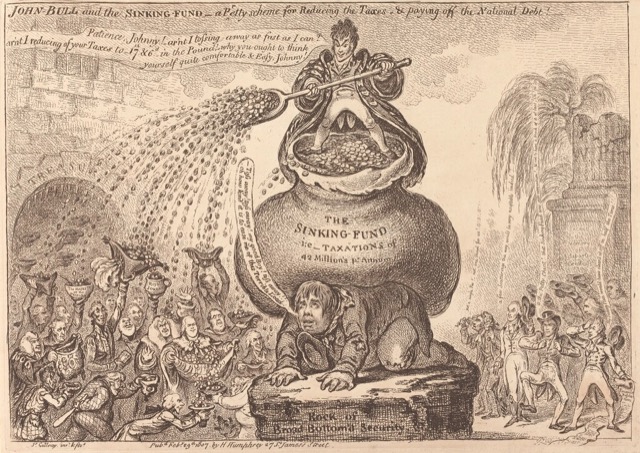
The concept isn’t new (governments and corporations have used sinking funds for debt repayment for centuries), but its application to personal budgeting has been repackaged by the FIRE movement, debt-free communities, and zero-based budgeting frameworks like YNAB. When economic anxiety is high, people search for control. Sinking funds hand it back.

General information only — not personalised financial advice. No return is guaranteed; always cross-check with an official source or a qualified financial professional before making financial decisions.

People also ask

What are some examples of sinking funds?#
Classic sinking fund targets include Christmas gifts, annual car insurance or registration, home maintenance, holidays, back-to-school costs, medical co-pays, and subscription renewals. Essentially any expense you can see coming on the calendar is a candidate. If you know it's going to cost money and you know roughly when, it belongs in a sinking fund, not on a credit card.
What are the disadvantages of a sinking fund?#
The main drawbacks are opportunity cost and complexity. Money parked in low-yield savings pots isn't growing aggressively elsewhere — though for short-term goals, that's usually the right trade-off. Managing multiple labelled pots can also feel administratively heavy if you're tracking ten different funds at once. And if your income is irregular, setting fixed monthly contributions to several funds simultaneously can feel rigid and stressful.
What are sinking funds example?#
Same answer as above — real-world examples include a car repair fund (say, £50/month set aside knowing your MOT and tyres will eventually land), a holiday fund built up over 10 months before a summer trip, or a Christmas fund started in January so December doesn't detonate your budget. The unifying logic: known cost, known deadline, regular contributions.
How much should be in your sinking fund?#
Exactly as much as the expense requires, divided by the time you have. If your car insurance is £600 and renews in 6 months, your sinking fund needs £100/month — no more, no less. There's no universal target amount because sinking funds are purpose-built, not a general savings buffer. Stack multiple funds based on your own calendar of predictable costs. This is illustrative maths, not personalised financial advice.
Why are sinking funds called that?#
The term comes from the idea of "sinking" — gradually paying down or setting aside money so a future liability is retired piece by piece rather than hitting all at once. Historically, governments used sinking funds to methodically retire national debt: ring-fenced money that would "sink" (reduce) the outstanding balance over time. The personal finance world borrowed the term and applied the same logic to everyday expenses.
Why do they call it a sinking fund?#
Same root: the word "sinking" here means to extinguish a debt or obligation gradually — not to drown. Think of it as a slow-burn countdown account that "sinks" the future cost before it ever arrives. It's one of those finance terms that sounds ominous but describes something genuinely reassuring.
What's the difference between savings and sinking funds?#
General savings are often open-ended — you're building a pot without a specific target or date. A sinking fund is laser-specific: one expense, one deadline, one monthly contribution calculated to meet it exactly. You might have both simultaneously — a general savings account growing for the long term and several sinking funds each earmarked for a known upcoming cost. They serve different jobs and shouldn't be conflated.
Are sinking funds a good idea?#
Yes — for anyone who has predictable future expenses (which is everyone), sinking funds are one of the most practical budgeting tools available. They convert irregular large costs into manageable monthly chunks, reduce reliance on debt, and eliminate the psychological shock of bills you technically knew were coming. The caveat: they require consistent income and the discipline to not raid the pots. This is general educational information, not personalised financial advice.
What is the sinking fund called now?#
It's still called a sinking fund — the term hasn't been rebranded in personal finance circles. Some budgeting apps and banks use softer language like "savings pots," "goals," or "envelopes" (a nod to the old cash-envelope system), but they describe the same mechanic. If you see "goal-based saving" on your bank app, you're looking at a sinking fund with a friendlier label.
What is the best account for a sinking fund?#
The ideal home for a sinking fund is somewhere accessible but not *too* accessible — a dedicated savings account, ideally one that earns at least some interest. Many people use banks or apps that allow multiple named sub-accounts or "pots" (Monzo, Starling, YNAB-linked accounts). The key criteria: easy to contribute to, separate from your spending account so you're not tempted, and liquid enough to access when the expense arrives. This is general information; compare products and consult official sources for current rates.
Where to put money for sinking funds?#
Separate, named savings pots within your bank — or a dedicated savings account per fund if you prefer more separation. The physical (or digital) separation from your main current account is the whole point: out of sight, not out of budget. High-street banks, online banks, and budgeting apps like YNAB or Monzo all support this. Avoid locking the money in fixed-term products if you'll need it within 12 months.
What are the rules for sinking funds?#
There are no legally mandated rules for personal sinking funds — it's a self-imposed discipline. The practical rules that make them work: label each fund clearly, calculate the exact monthly contribution (target ÷ months), automate the transfer so it happens before you can spend the money, and don't mix funds together. The cardinal rule: the money is spoken for. It's not a bonus pot to raid for something else.
Where should sinking funds be kept?#
In a separate savings vehicle from your everyday current account — at minimum a named sub-account, ideally a dedicated easy-access savings account. The separation prevents accidental spending. If your bank supports multiple labelled pots (many digital banks do), that's a clean, low-friction solution. For larger, longer-horizon sinking funds, a higher-interest easy-access account makes sense. General guidance only — check current offerings with your own bank or a financial comparison site.
What sinking funds should i have?#
Start with whatever is coming up on your calendar: car maintenance or insurance, Christmas, a holiday, home repairs, medical or dental costs, and any annual subscriptions. Then work backwards from your own life — if you have a dog, a vet fund; if you rent, a moving fund; if you have kids, a school-costs fund. The rule of thumb: if you *know* it's coming and it costs real money, it deserves its own fund.
What's sinking funds?#
A sinking fund is money you save gradually, in advance, for a specific known future expense — so when the bill arrives, the cash is already there. You set a target amount, divide it by the months until it's due, and save that slice regularly, usually in a dedicated account or pot. It's a smoothing tool: turning one big future hit into small, painless monthly contributions.
What sinking funds to have?#
Prioritise the expenses that have historically blindsided your budget. For most people that means: car costs, home maintenance, Christmas, holidays, and insurance premiums. Beyond that, audit the last 12 months of your bank statements — every annual or semi-annual cost you scrambled to cover is a sinking fund you should have had. Build the list from your own financial reality, not a generic template.
What are sinking funds in a budget?#
In a monthly budget, sinking fund contributions are treated as non-negotiable line items — just like rent or utilities. You allocate a fixed amount each month to each fund before you touch discretionary spending. This is the core logic of zero-based budgeting: every pound has a job, and sinking fund contributions are some of the most important jobs on the list because they defuse future financial stress proactively.
What does sinking funds mean?#
A sinking fund is a reserve of money set aside incrementally to meet a specific, anticipated future cost. The word "sinking" refers to gradually extinguishing a future liability — reducing it to zero before it becomes due. In personal finance, it means you're never caught off-guard by a bill you could have seen coming.
What are sinking funds used for?#
They're used for any predictable, irregular expense — things that don't hit every month but will definitely hit eventually: car repairs, holidays, annual insurance, home appliances, weddings, or medical costs. The entire point is to convert infrequent large costs into regular small contributions, keeping your monthly budget stable and your reliance on credit low.
What are sinking funds in bonds?#
In the bond market, a sinking fund is a mechanism where the bond issuer (a corporation or government) sets aside money periodically to retire portions of the debt before the full maturity date. It reduces default risk for investors because the issuer is systematically paying down the principal rather than facing a single massive repayment at the end. It's the institutional ancestor of the personal finance version — same principle, much larger scale. This is general background information, not investment advice.

Sources

  • manual_validated
  • wikipedia_export

Related topics

Related products

As an Amazon Associate, datastats earns from qualifying purchases.