Tristan Harris
Tristan Harris is the former Google design ethicist turned tech's most credible critic, the man who made "humane technology" a household phrase by arguing that your phone is engineered to hijack your brain.
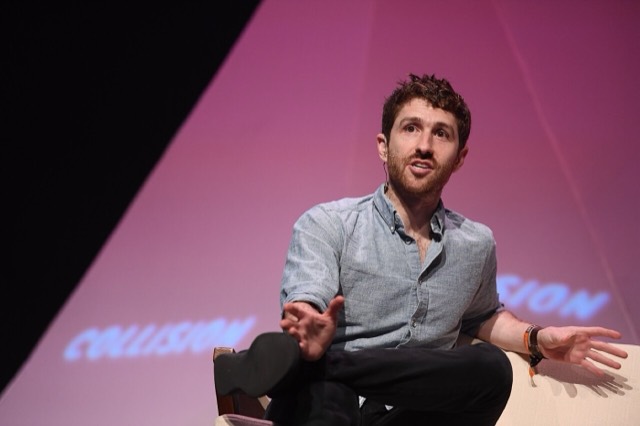
Tristan Harris is a technology ethicist, public speaker, and co-founder of the Center for Humane Technology (CHT), an advocacy organization pushing back against what he calls the “extractive attention economy.” He rose to public prominence after a 2013 internal Google presentation, later leaked and widely shared, called A Call to Minimize Distraction & Respect Users’ Attention, which went viral inside and outside Silicon Valley and reframed the conversation about how tech products are designed.
Harris spent several years at Google as a Design Ethicist and Product Philosopher, a role that was, by his own account, largely symbolic, he had the title but limited institutional power to change Google’s core advertising-driven incentives. He left in 2016 to focus full-time on advocacy. In 2018 he co-founded the Center for Humane Technology alongside Aza Raskin, and the organization has since testified before the U.S. Senate and advised legislators worldwide.
He became a household name after starring in Netflix’s 2020 documentary The Social Dilemma, directed by Jeff Orlowski. The film blended documentary interviews with fictional dramatizations to illustrate how social media platforms exploit psychological vulnerabilities. It was watched by tens of millions globally and sparked widespread debate about screen time, algorithmic radicalization, and mental health, particularly among teenagers.
Harris is also the co-host of the podcast Your Undivided Attention, produced by CHT, where he interviews researchers, policymakers, and technologists about the societal effects of AI and social media. More recently, he has pivoted heavily toward warning about the risks of advanced artificial intelligence, arguing that AI compounds the same attention-hijacking problems social media introduced, but at a far greater scale.
He is one of the few Silicon Valley insiders, someone who actually built persuasive technology, to become a sustained, credible critic of the industry, which is precisely why he attracts such intense public curiosity and search traffic.