← PEOPLE
datastats / Tech
LIVE
Tech

Demis Hassabis

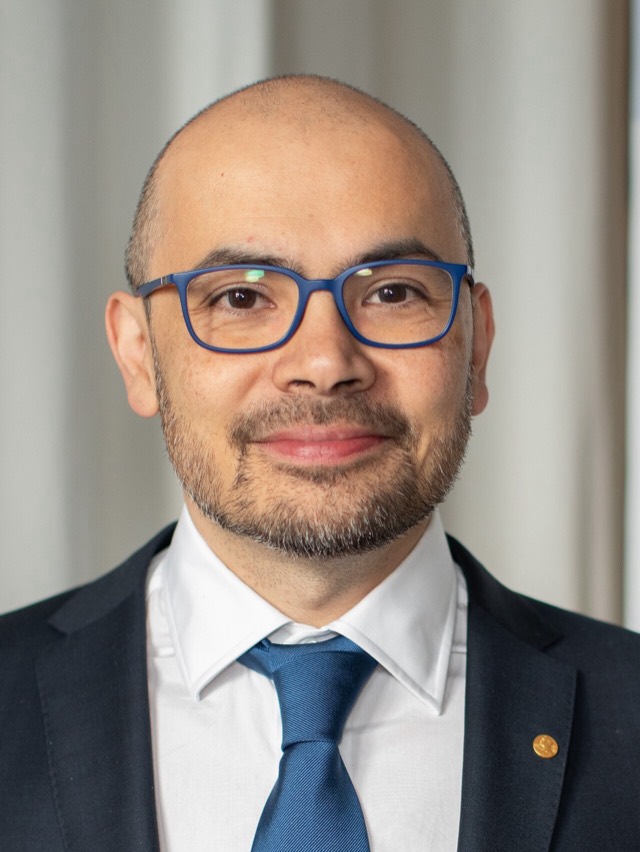
Nobel laureate, chess prodigy, neuroscientist, and CEO of Google DeepMind, Demis Hassabis is the most consequential figure in AI today.
By · datastats · Updated June 15, 2026
Demis Hassabis

Demis Hassabis is the co-founder and CEO of Google DeepMind, the world’s leading AI research lab, as well as CEO of Isomorphic Labs, a DeepMind spin-out using AI to accelerate drug discovery. As of 2026, he also serves as an AI adviser to the British government, a role that underscores just how central he has become to the AI policy conversation.

Born on 27 July 1976 in London, Hassabis was a chess prodigy who reached master level by age 13. He went on to earn a PhD in cognitive neurosciences from University College London (UCL) and co-founded DeepMind in 2010. Google acquired the company in 2014, and the rest is history.

The milestones speak for themselves: AlphaGo beat the world’s best Go players in 2016, stunning everyone who thought that milestone was a decade away. AlphaFold cracked the protein-structure prediction problem, one of biology’s hardest challenges, and has since been used by over 2 million researchers worldwide. In 2024, Hassabis and DeepMind colleague John Jumper were awarded the Nobel Prize in Chemistry for AlphaFold, cementing his place in the scientific canon.

That Nobel also came with a knighthood: he is now formally Sir Demis Hassabis. He simultaneously oversees Google’s flagship Gemini AI models, making him one of the rare people running both frontier science and frontier commercial AI at the same time. It’s that combination, the chess brain, the neuroscience PhD, the Nobel, the CEO role, that makes him irresistible to search engines and humans alike.

People also ask

Hassabis is based in London, where Google DeepMind is headquartered. He was born there and has spent the bulk of his career in the city. His precise residential address is private and not publicly reported, nor should it be.

He is British. Born in London to a father of Greek Cypriot origin and a mother of Chinese Singaporean origin, he holds British nationality and was knighted by the British Crown following his 2024 Nobel Prize.

He was born on 27 July 1976, which makes him 48 years old as of mid-2025, turning 49 in July 2025. By 2026 he is 49, or 50 after his July birthday.

His height has not been officially stated or reliably reported in any public source. Any specific figure circulating online is unverified speculation, not worth treating as fact.

No audited, confirmed figure exists. Estimates from outlets like Forbes and Bloomberg fluctuate significantly with Google's share price and DeepMind's valuation, so any precise number would be misleading to state as fact. What is uncontroversial: as co-founder and long-tenured CEO of one of the world's most valuable AI labs, he is widely considered to be a billionaire, but treat any specific dollar figure you see online as an informed estimate, not a verified fact.

Hassabis is known to be married, but the identity and personal details of his wife are not publicly reported in any reliable source. He keeps his family life firmly out of the spotlight, and that privacy deserves to be respected.

He is married, but the name and details of his spouse are not publicly confirmed in any credible reporting. His personal life is deliberately kept private, and no reliable source has published this information.

His religious beliefs have not been publicly stated or reported in any reliable source. He has spoken extensively about science, the brain, and consciousness, but has not made any public declarations about personal faith or religious affiliation.

Yes. Hassabis is married. Details about his spouse and family are kept private and have not been disclosed in any verified public source.

This question is a bit ambiguous, if you're asking whether he is religious, his faith or lack thereof has not been publicly confirmed. He has not made any known public statement about religious belief, so it would be irresponsible to label him one way or the other.

He was knighted, receiving the title 'Sir', following his Nobel Prize in Chemistry in 2024, awarded for the development of AlphaFold, the AI system that solved protein structure prediction. The knighthood reflects both the scientific significance of that achievement and his broader contribution to British science and technology.

No verified, audited figure is publicly available. Estimates float around the billionaire range given his co-founder equity in DeepMind and his seniority at Google/Alphabet, but those numbers shift with markets. Treat any precise figure as an estimate, not a confirmed fact.

His salary and total compensation have not been publicly disclosed. As a senior executive at Alphabet-owned DeepMind, his package would likely include salary, bonuses, and equity, but no confirmed figures have been reported, so stating a number would be speculation.

This detail has not been reported in any verified public source. He has spoken in interviews about the importance of sleep to cognition, hardly surprising for someone with a PhD in cognitive neurosciences, but no specific sleep routine has been confirmed.

Sort of, the framing of 'half' is an oversimplification. His father is of Greek Cypriot origin and his mother is of Chinese Singaporean origin, making him of mixed heritage. 'Half Chinese' is a rough approximation of one branch of his ancestry, but he is British-born and British-identified.

He and DeepMind colleague John Jumper won the 2024 Nobel Prize in Chemistry for developing AlphaFold, an AI system that can accurately predict the 3D structure of proteins from their amino acid sequences. This solved a problem biologists had worked on for 50 years, and the tool has already been used by over 2 million researchers to accelerate drug discovery, disease research, and our fundamental understanding of life.

Yes. He holds a PhD in cognitive neurosciences from University College London (UCL). His research there focused on the role of the hippocampus in memory and imagination, work that directly influenced how he later approached building AI systems inspired by the brain.

His first name is pronounced 'DEH-mis' (not 'dee-mis'), reflecting its Greek Cypriot roots, it's a form of Dimitris. His surname is pronounced 'HASS-ah-bis.' He has confirmed the pronunciation of his first name in interviews, so 'DEH-mis HASS-ah-bis' is the safe bet.

Historically, Leonardo da Vinci holds the crown almost by consensus, painter, engineer, anatomist, inventor, and scientist rolled into one. In the modern era, candidates like John von Neumann (mathematics, physics, computing, economics) make a strong case. Hassabis himself is frequently cited as a contemporary polymath: chess grandmaster-level player, neuroscientist, game designer, and AI pioneer, an unusually wide range by any measure.

Genuinely rare, and getting rarer as fields deepen. The explosion of specialized knowledge since the 19th century means true mastery across multiple disciplines is exponentially harder to achieve. Most 'polymaths' today are multi-disciplinary experts rather than masters of several entirely distinct fields. Hassabis is a modern outlier: world-class chess player, published neuroscientist, game developer, and AI architect, a combination that is statistically near-unique.

Related topics
Tech Brands
Google
Tech Trending now
Claude Fable 5
Tech Trending now
ChatGPT
Tech Trending now
Gemini-Powered Siri
Tech Trending now
iOS 27
Tech Trending now
ChatGPT vs Claude
Tech People
Andy Jassy
Tech People
Bill Gates