Messi and Ronaldo at the 2026 World Cup
FINAL RESULT (19 Jul): Argentina 0–1 Spain AET. Messi's World Cup ended in defeat; Spain won with Ferran Torres 106' (Nico Williams assist). Enzo Fernández red card 90'. Argentina: 0 shots on target in 120 min. Messi: 8 goals in 2026, 21 career WC goals, Mbappé (10 goals, 22 career) broke the record in the same tournament. Ronaldo eliminated in R16 by Spain. Sources: FIFA, ESPN, Fox Sports.
The context
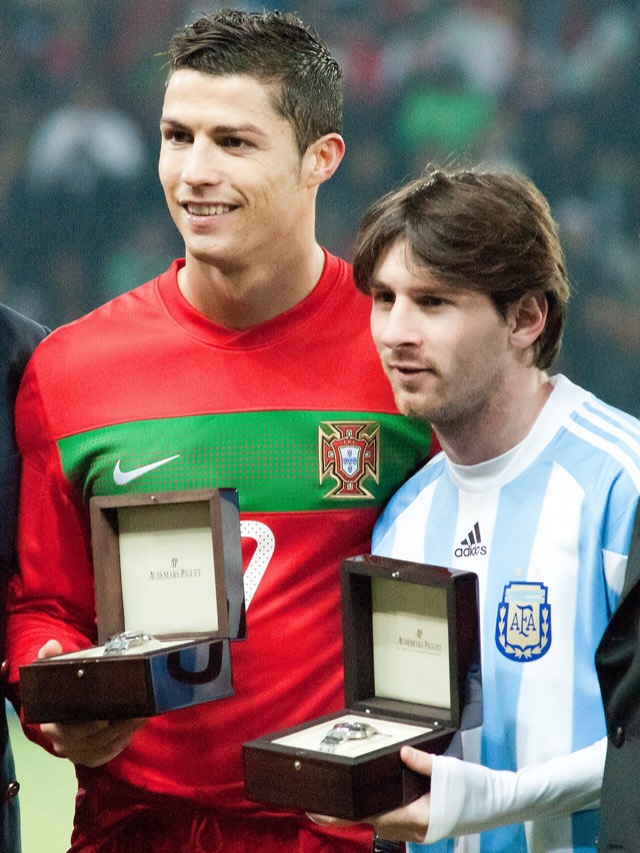
The 2026 FIFA World Cup kicked off on 11 June 2026 across the United States, Canada, and Mexico, and one storyline towers above everything else: Lionel Messi and Cristiano Ronaldo, both in their national squads and competing in the tournament, are almost certainly stepping onto the biggest stage for the very last time. Both men are on course to become the first players in history to appear in six different World Cups, that alone is a record. Together, it’s a cultural event unlike anything football has seen.
Messi arrives as the defending champion. He turns 39 during the tournament, captains Argentina, and plays club football for Inter Miami. Ronaldo is 41, the all-time leading international goalscorer, and is chasing the one trophy that has always eluded him, the World Cup, in what is almost certainly his final shot. Portugal face DR Congo, Uzbekistan, and Colombia in the group stage.
The “last dance” framing is doing enormous work on search engines right now. Fans who grew up watching this rivalry unfold across nearly two decades are treating 2026 as a farewell ceremony, a chance to answer old arguments, and a live countdown clock all at once. It is, objectively, one of the most-searched sporting storylines on the planet heading into the summer.
The tournament also marks a structural shift: at 48 teams, it is the largest World Cup ever staged, meaning more matches, more paths to the final, and, crucially, more opportunities for both veterans to extend their runs deep into the competition before the curtain finally falls.
Messi delivered on June 16. At Arrowhead Stadium in Kansas City, Argentina dismantled Algeria 3-0, and Messi scored all three goals (17’, 60’, 76’), completing the first World Cup hat-trick of his career in his 200th Argentina appearance. The three goals brought his career World Cup tally to 16, equalling Miroslav Klose’s all-time record. The night was, by any measure, one of the defining individual performances in World Cup history: the greatest player of all time, at 38, on his 200th cap, equalling the most revered scoring record in the sport’s biggest tournament. Ronaldo opened on June 17 against DR Congo in Houston, Portugal drew 1-1, with João Neves striking early but Yoane Wissa levelling at half-time, and Ronaldo’s best chances went unconverted.
Ronaldo answered on June 23. At NRG Stadium in Houston, Portugal demolished Uzbekistan 5-0 in Group K’s Matchday 2. Cristiano Ronaldo scored twice, and with those goals became the first player in the history of football to score at six different World Cups. No man had ever reached that milestone before him. He joins Messi as the only players to have scored in each of their six World Cup campaigns. Nuno Mendes curled in a trademark free-kick, an Uzbekistan own goal added a fourth, and Rafael Leão rounded off the rout. Portugal top Group K; their final group match is against Colombia. And on June 24, today, Lionel Messi turns 39. The greatest player in the history of the sport, active, competing at the World Cup, and still breaking records. That is the story of the 2026 tournament in one sentence.
Messi broke the record on June 22. At AT&T Stadium in Arlington, Texas, Argentina defeated Austria 2-0 in a controlled Group J performance. Messi scored in the 38th minute, slotting in after a Facundo Medina lay-off, and added a second deep in stoppage time (90+’). Those two goals brought his total World Cup career tally to 18, surpassing Klose’s record of 16 outright. Messi is now, without question, the highest scorer in the history of men’s World Cup football. The crowd at AT&T Stadium greeted the record-breaking moment with a standing ovation. Argentina are through to the Round of 32 with a perfect 6 points from 2 Group J matches; their MD3 fixture is against Jordan on June 26.
The paths diverge: Messi in the final, Ronaldo goes home. Through the knockout rounds, the two men’s trajectories separated completely. Messi added further goals including an 8th in the quarter-final, then in the semi-final on July 15 at Mercedes-Benz Stadium, Atlanta, he provided 2 assists as Argentina came from behind to beat England 2-1, Enzo Fernández equalising in the 85th from a Messi cross, Lautaro Martínez winning it in the 90+2’ from another Messi ball. His 2026 tally stands at 8 goals, bringing his career World Cup total to 21, the all-time men’s record.
Ronaldo, meanwhile, scored a penalty in the Round of 32 against Croatia (Portugal won 2-1 in Toronto), but Portugal were eliminated in the Round of 16 by Spain. He departs with 3 goals from this tournament and a milestone that will never be repeated, but without the World Cup that defined his entire career arc. At 41, the door is closed.
The final, July 19, MetLife Stadium, New Jersey. Messi walked out for Argentina vs Spain. The story did not end in glory. Spain won 1–0 after extra time: Enzo Fernández was sent off in the 90th minute, reducing Argentina to ten men for the last 30 minutes and extra time; substitute Ferran Torres scored the only goal in the 106th minute from a Nico Williams assist. Argentina recorded zero shots on target across 120 minutes; Emiliano Martínez made 10 saves but could not prevent the defeat. Messi finished the tournament with 8 goals and 21 career World Cup goals, the record holder going in, now surpassed: Kylian Mbappé scored 10 goals in 2026 to finish with 22 career WC goals, a new all-time record. The final goal of Messi’s 2026 World Cup was not scored in the final itself. At 39, his last World Cup ended in defeat, in extra time, against the best team in the world. The curtain falls with the two greatest of their generation having left everything they had on the biggest stage. Sources: FIFA, ESPN, CBS Sports.