← BRANDS
datastats / Tech
LIVE
Tech

Snapchat

Snapchat built its empire on disappearing content and teenage anxiety, and a decade later, it's still the app every parent misunderstands and every advertiser underestimates.
By · datastats · Updated June 4, 2026
Snapchat
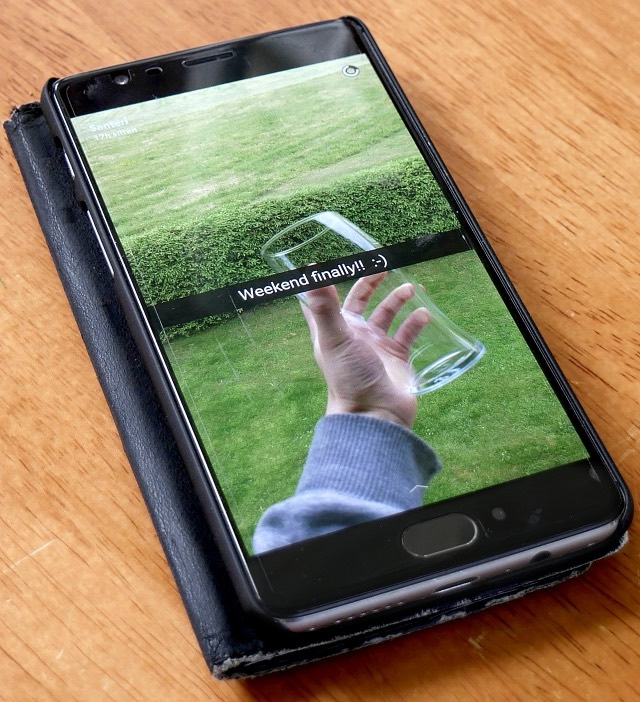
Santeri Viinamäki · CC BY-SA 4.0

Snapchat is a multimedia messaging app developed by Snap Inc., launched in 2011 out of Stanford University. Its core gimmick, photos and videos that vanish after viewing, felt like a gimmick until it rewired how an entire generation communicates. Stories, streaks, lenses, and the Discover feed all originated or were popularized here before being shamelessly cloned by Instagram and TikTok.

The company went public in March 2017 under the ticker SNAP on the NYSE, valuing it at roughly $24 billion at IPO. It has never been a smooth ride: the stock has swung wildly, the app has weathered catastrophic redesigns, and CEO Evan Spiegel’s rejection of a reported $3 billion acquisition offer from Facebook in 2013 is still the stuff of Silicon Valley legend.

People search for Snapchat constantly, not because they love the brand, but because its interface is deliberately opaque. Hidden menus, cryptic emoji, a solar-system metaphor for friendships, and username privacy all force users to Google things the app refuses to explain. That opacity is a feature, not a bug: it keeps the platform feeling like an insider language only younger users fluently speak.

What makes Snapchat uniquely uncomfortable to discuss honestly is its user base skewing heavily teenage, its history of privacy controversies, and its role in the broader conversation about social media’s mental-health toll. Snap Inc. has faced scrutiny from regulators and parents alike, and its own internal research on those topics has surfaced in litigation. The facts here speak for themselves.

People also ask

Snapchat is owned by **Snap Inc.**, a publicly traded American company (NYSE: SNAP). Because it's public, no single person "owns" it outright, institutional investors like Vanguard and BlackRock hold large stakes, but co-founders Evan Spiegel and Bobby Murphy retain outsized voting power through a dual-class share structure that keeps real control firmly in their hands.

Snapchat is **blocked or heavily restricted in China**, where most Western social media platforms are inaccessible without a VPN under the Great Firewall. It has also faced restrictions or scrutiny in Iran and other countries with broad internet censorship regimes. In 2023, several governments, including devices used by U.S. federal employees, restricted or banned Snapchat on government-issued hardware over data-security concerns.

Snapchat does not offer a public directory to look up who owns a specific username, that's a deliberate privacy design. If you received a username from an unknown source, the only official way to find out who it belongs to is to add them and see what profile information they've voluntarily shared. Third-party "Snapchat username lookup" sites are not affiliated with Snap and their accuracy is unreliable.

**Evan Spiegel** is the co-founder and CEO of Snap Inc., and the public face most associated with "owning" Snapchat. He co-created it alongside **Bobby Murphy** (CTO) and the late **Reggie Brown**, who was later bought out and whose contribution is frequently glossed over in the official origin story, a point that was actually the subject of a legal settlement.

Snapchat doesn't use a traditional "follower" model the way Instagram or Twitter do. Instead, it has **Friends** (mutual connections) and **Subscribers**, the latter applies to public profiles run by creators and celebrities, where fans can subscribe without a mutual add. Snapchat's global user base crossed **400 million daily active users** in 2024, with its core demographic being 13–34 year-olds.

Snapchat's friend emojis are an automated relationship-status system. **🔥 (Fire)** = you're on a streak; **💛 (Yellow Heart)** = you're each other's #1 best friend; **❤️ (Red Heart)** = #1 best friends for two weeks straight; **💕 (Pink Hearts)** = two months; **😊 (Smile)** = one of your best friends; **😬 (Grimace)** = you share a #1 best friend with someone else; **⌛ (Hourglass)** = your streak is about to expire. They reset automatically based on your snapping habits.

At its core, Snapchat is used for **ephemeral photo and video messaging**, content that disappears after viewing or within 24 hours on Stories. In practice, it's also a platform for following celebrities and publishers via Discover, playing with AR face lenses, maintaining daily streaks as a social ritual, and, frankly, private communication that feels harder to screenshot without detection (though it's not impossible).

Snapchat's AR lenses that reliably detect and work on **dogs** include the classic **dog face lens** (adds floppy ears and a tongue), several puppy-ear variants, and seasonal lenses Snap releases periodically. To find them, open the camera, flip to your dog, and long-press their face, the app's lens carousel will surface animal-compatible options. Results vary by breed and lighting; flat-faced breeds like pugs tend to confuse the face-detection algorithm.

Snapchat's icon system is color-coded and shape-based. A **solid red square** = a snap without audio was sent to you; **solid purple** = a snap with audio; **solid blue** = a chat message. **Outlined versions** of those same shapes mean the content has been opened. **Arrows** indicate what you sent: red arrow = photo snap sent, purple = video with sound, blue = chat sent. It's a deliberately non-verbal language designed to feel native to the app.

Snapchat Planets are part of **Snapchat Plus** (the paid subscription). They visualize your "Solar System" of close friends, you are the Sun, and your top eight friends are assigned planets in order of Mercury through Neptune based on how frequently you interact. **Mercury = your #1 best friend**, Neptune = your #8. It's a gamified intimacy ranking dressed up in space metaphors, and yes, people have reported friendship drama caused directly by their planetary assignment.

**Snapchat+** (the paid tier, currently ~$3.99/month) unlocks features like the Friend Solar System, the ability to see who rewatched your Story, custom app icons, a badge on your profile, exclusive lenses, and the ability to pin a best friend. It does **not** remove ads, which is a common misconception. It's less a power-user toolkit and more a bundle of social-status signals Snap monetizes off its most engaged users.

Cat face detection on Snapchat is hit-or-miss, the app's AR is primarily optimized for human faces. That said, some lenses explicitly tagged for animals will attempt to track a cat's face, and **Snapchat's "Cat" lens** (searchable in the lens carousel) adds ears and whiskers when it cooperates. Cats with high-contrast facial markings and good lighting give the best results. Snappy success is not guaranteed; cats, as ever, are uncooperative subjects.

There's no universal reverse-lookup tool to identify a specific Snapchat filter or lens from a screenshot. Your best options: **check the lens name** visible in the bottom-left corner when a lens is active, search Snapchat's **Lens Explorer** (lens.snapchat.com) by keyword or description, or post the screenshot to communities like Reddit's r/snapchat where users often identify popular lenses by sight.

Snapchat launched on **July 8, 2011**, initially under the name *Picaboo* before being rebranded. It was available on iOS first, built by Stanford students Evan Spiegel and Bobby Murphy. The Android version followed in 2012, and the app's explosive growth, particularly among teenagers, made it a household name by 2013.

Snapchat became available in India when it launched globally on Android in **2012**, but it remained a relatively niche product there for years due to data costs and Android device fragmentation. Snap made a concerted push into India around **2019**, investing in local content and lite-data features, though growth has been uneven and the platform trails far behind WhatsApp and Instagram in Indian daily active users.

The **green dot** on a friend's profile or in your chat list indicates they are **currently active** on Snapchat, essentially an online/presence indicator. It appears when someone has the app open. Snapchat+ subscribers have the option to hide their own activity status from others, meaning the absence of a green dot doesn't always confirm someone is offline.

Snapchat officially launched on **July 8, 2011**. It started as a class project at Stanford, went live on the App Store under the name *Picaboo*, and was renamed Snapchat within months. By late 2012 it was processing over one billion photo sends per day, growth that caught the entire tech industry off guard.

Snap has run **creator monetization programs** that pay eligible users, most notably through **Spotlight**, its TikTok-rival short-video feed, which famously distributed $1 million per day to top creators when it launched in late 2020. Those payouts have since been scaled back and restructured. Snap also pays publishers through its **Discover** ad-revenue share. For the average user, Snapchat does not pay you simply for posting or having followers.

Snapchat became accessible in Pakistan as part of its **global Android rollout in 2012**, with no country-specific launch event. Adoption grew gradually, tied closely to smartphone penetration and data affordability. Pakistan has periodically seen government-level scrutiny of social media platforms broadly, but Snapchat has not faced a formal country-wide ban there as of the time of writing.

Snapchat was created in **2011**, conceived as a Stanford University project by Evan Spiegel, Bobby Murphy, and Reggie Brown. The core idea (photos that self-destruct) was Brown's, per court documents from the subsequent legal dispute in which Brown was paid a settlement reportedly worth around $157 million. The app went live on July 8, 2011.

Related topics
Tech Trending now
Claude Fable 5
Tech Trending now
ChatGPT
Tech Trending now
Gemini-Powered Siri
Tech Trending now
iOS 27
Tech Trending now
ChatGPT vs Claude
Tech People
Andy Jassy
Tech People
Bill Gates
Tech People
Dario Amodei