← BRANDS
datastats / Gaming
LIVE
Gaming

PlayStation

PlayStation dominates living rooms worldwide, but its pricing, exclusivity walls, and the PS5-vs-PS6 guessing game are the questions Sony's marketing team will never answer straight, so we will.
By · datastats · Updated June 4, 2026
PlayStation
Evan-Amos · Public domain

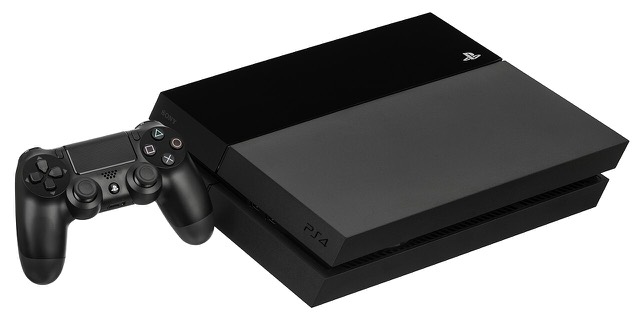
PlayStation is Sony Interactive Entertainment’s gaming division, a brand that has sold over 500 million consoles across five generations since 1994. Today its flagship hardware is the PS5 and PS5 Pro, its subscription backbone is PlayStation Plus, and its ecosystem stretches from exclusives like Spider-Man 2 and God of War to cloud streaming and a handheld remote-play device called the PlayStation Portal.

People search PlayStation obsessively for one core reason: the brand is expensive, and Sony is not apologetic about it. A PS5 runs $449–$499, a PS5 Pro launched at $699, a PlayStation Plus Premium subscription adds another $160/year, and first-party games routinely open at $70 a pop. Every new announcement triggers a fresh wave of “is this actually worth it?” searches.

The other engine driving searches is the PS6 rumor cycle. Sony has confirmed almost nothing publicly, but analyst reports, patent filings, and supply-chain leaks keep the internet in a permanent state of speculation. People want to know whether to buy now or wait, a question Sony is perfectly happy to leave unanswered, because uncertainty keeps current-gen hardware moving.

Finally, PlayStation sits in a genuine platform war with Xbox’s Game Pass model and Nintendo’s hardware creativity. Xbox’s decision to release many of its exclusives on PC and, increasingly, rival platforms has put pressure on Sony’s own exclusivity wall, which is quietly and selectively crumbling, as more PlayStation studios ship titles on PC. That crossover question is now one of the most-searched PlayStation topics on the internet.

People also ask

Because Sony can charge $70 and enough people pay it, that's the blunt truth. First-party PlayStation games have budgets that routinely exceed $200 million in development costs, and Sony uses those production values to justify premium pricing that it raised industry-wide in 2021. Unlike Xbox, Sony does not drop its biggest exclusives into a subscription service on day one, so if you want *God of War* or *Horizon* at launch, you pay full price or you wait years for a sale.

Sort of, but only for a narrow slice of buyers. The PS5 Pro, which launched in late 2024 at $699 without a disc drive, delivers a meaningfully upgraded GPU with roughly 45% more raw rasterization performance and improved PlayStation Spectral Super Resolution upscaling, producing sharper, more stable 4K visuals. If you own a high-end 4K TV and play visually demanding first-party titles, the upgrade is real and noticeable. If you're coming from a PS4 or a base PS5 connected to a 1080p screen, you will barely feel $700 worth of difference.

Yes, at the Essential tier ($79.99/year), but only if you actually play the monthly free games and use online multiplayer. PlayStation Plus Essential is effectively a paywall on online play plus a rotating catalog of free titles, and Sony has a strong track record of giving away games that retail for $30–$60. If you buy two or three games a year and play online regularly, the math works in your favor; if you only log on occasionally, it starts to feel like a subscription tax.

No, for most people. The PlayStation Portal ($199) is a Wi-Fi-only remote-play device that streams games from your PS5, it has no onboard processing, no Bluetooth audio support at launch, and cannot work without a PS5 and a strong local network. It is a luxury accessory for people who share a TV and need to offload to another room, not a portable gaming device competing with the Nintendo Switch. At $199 for essentially a screen with a DualSense attached, it's hard to recommend broadly.

Not for most subscribers. PlayStation Plus Premium ($159.99/year) adds a game catalog, cloud streaming, and classic PlayStation 1–3 titles, but the catalog's depth doesn't compare to Xbox Game Pass for day-one releases, and the cloud streaming quality is inconsistent. The sweet spot for value is the Extra tier ($134.99/year), which adds the game catalog without the cloud and classic game layers most people won't use. Premium makes sense only if you specifically want PS1/PS2/PSP nostalgia or cloud streaming as a primary feature.

None of the major ones, PlayStation exclusives are not coming to Xbox. What *is* happening is that Sony has been quietly porting a growing list of former PlayStation exclusives to **PC** via Steam and the Epic Games Store: *Horizon Zero Dawn*, *God of War*, *Marvel's Spider-Man*, *The Last of Us Part I*, *Ghost of Tsushima*, and others are all available on PC. Xbox and PlayStation remain entirely separate ecosystems with no cross-platform exclusivity deals for first-party titles.

No, the PS4 is not shutting down imminently, but Sony is clearly in wind-down mode. Sony confirmed in 2021 that it was ending PS4 game production, and the platform's online servers and PlayStation Store remain active as of 2025. However, new first-party titles no longer ship for PS4, and Sony has given no official end-of-service date, the console is simply being left to run until the player base migrates naturally. Expect online services to persist for several more years, but don't expect new games.

Buy the PS5 now unless you have no problem waiting at least two to three more years. The PS6 has no confirmed release date as of 2025, and industry analysts generally don't expect it before 2027 at the earliest. The PS5's library is now deep, with *Spider-Man 2*, *Demon's Souls*, *Returnal*, *Final Fantasy XVI*, and many others, and prices have stabilized. Waiting indefinitely for the next generation is a game you almost always lose.

Sony hasn't announced a price and likely won't for years, but expect $499–$599 at minimum based on the pricing trajectory from PS4 ($399) to PS5 ($499) to PS5 Pro ($699). Manufacturing costs, memory prices, and component inflation all point upward. If Sony prices the base PS6 under $500 to stay competitive with whatever Xbox does next, it will likely sacrifice some hardware ambition to get there.

Substantially better on paper, the PS6 is widely expected to use a next-generation AMD GPU architecture and a significantly faster CPU, enabling native 4K/8K output, vastly improved ray tracing, and potentially true generative AI-driven upscaling baked into the silicon. The real-world question is whether game developers will actually exploit that headroom in the first two to three years, because they almost never do at launch. The PS6 will be a bigger leap than PS4→PS5, but the games that prove it won't arrive immediately.

Yes, if you don't already own a PS5, at that point it's simply the best version of the current generation available. By 2026 the PS5 Pro's $699 launch premium may ease with occasional bundles or regional sales, and its enhanced performance will be better utilized as more Pro-optimized game patches accumulate. If you already own a base PS5, the calculus is harder: you'd be paying a significant premium for a console one to two years away from being overshadowed by the PS6.

Yes, unambiguously, if you're coming from PS4 or have never owned a PlayStation. The PS5's library is now one of the strongest in console history, load times are genuinely transformative thanks to its custom SSD, and the DualSense controller's haptic feedback and adaptive triggers are the most meaningful controller innovation in a decade. The only reason to pause is if you're determined to wait for the PS6, but that's a long wait with no guaranteed payoff date.

The premise is a stretch, Sony has sold over 65 million PS5 units as of 2025, making it one of the fastest-selling consoles in history. What *is* true is that the growth rate has plateaued as the early-adopter wave saturates and potential buyers either wait for the PS6 or balk at the $449–$499 price tag. The market isn't rejecting the PS5; it's entering the normal mid-cycle slowdown every console generation experiences.

No official price has been set, and Sony won't announce one until the PS6 is close to launch, likely 2027 or later. Based on component costs, inflation, and Sony's recent willingness to push prices upward (see: the PS5 Pro at $699), the base PS6 is unlikely to come in below $499 and could realistically open at $549–$599. A Pro variant, if history repeats, would add another $150–$200 on top of that.

Most credible industry analysts and supply-chain reporters put the PS6 at 2027 at the earliest, with 2028 also cited as a realistic window. Sony's own financial disclosures have referenced a "next-generation platform" in long-range planning language, but no launch window has been confirmed publicly. That means as of 2025, you're looking at a minimum two-year wait, probably longer.

The PS5 Pro is the better piece of hardware, full stop, it has a significantly upgraded GPU, improved upscaling via PSSR, and better thermal performance. The honest question is whether it's $200–$250 better than the base PS5, and for most players on average TVs playing a mix of game genres, it is not. If you're a graphics-first player with a high-end 4K display who plays demanding first-party titles, the Pro's advantages are real and visible; everyone else is paying a premium for gains they won't fully see.

The PlayStation 5 Pro, released in November 2024, is the most recent and most powerful PlayStation console available. It features an upgraded GPU with approximately 45% more rasterization performance over the base PS5, Sony's proprietary PlayStation Spectral Super Resolution upscaling, and a 2TB SSD, all at $699 without a disc drive included in the box.

Yes, a PS6 is coming eventually, Sony has never publicly denied it, and a sixth console generation is a business certainty. But "coming out" implies a known timeline, and there isn't one. No official announcement, release window, or spec sheet has been published as of 2025. The earliest credible industry estimates place it around 2027.

Yes, almost certainly, every PlayStation generation has been a meaningful hardware leap over the last, and there's no reason to expect that to change. The PS6 is expected to deliver substantially higher GPU performance, faster storage, and deeper AI-driven features than the PS5. That said, the PS6 doesn't exist yet in any confirmed form, so anyone telling you exactly *how much* better it will be is speculating, not reporting.

Yes, a PS6 is coming, Sony is not getting out of the console business. What's unknown is when. Industry analysts broadly expect a 2027 release window, though 2028 is also plausible given that the PS5 Pro's late 2024 launch gives Sony a commercial incentive to milk the current generation a bit longer before committing to a costly new platform rollout.

Related topics
Gaming Trending now
How to cancel PlayStation Plus
Gaming Trending now
Marvel's Wolverine
Gaming Trending now
Persona 6
Gaming Trending now
Halo: Campaign Evolved
Gaming Trending now
Gears of War: E-Day
Gaming Trending now
Hollow Knight: Silksong
Gaming People
Amouranth
Gaming People
Dr Disrespect