Airbnb
Airbnb promised to disrupt hotels and democratize travel — instead it turbocharged rent prices, spawned an army of scammers, and is now getting banned city by city around the world.
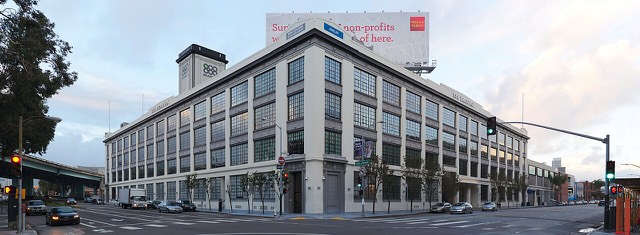
Airbnb launched in 2008 as a scrappy air-mattress startup and grew into a $70+ billion publicly traded juggernaut that fundamentally rewired how people book short-term accommodation. The pitch was simple: homeowners earn extra cash, travelers get cheaper, more authentic stays than sterile hotel rooms. For a window of time in the early 2010s, it genuinely delivered on both counts.
Then the math changed. Professional investors bought up entire apartment blocks, listed them exclusively on Airbnb, and turned a peer-to-peer marketplace into a parallel hotel industry — one with almost none of the consumer protections, labor standards, or tax obligations of the original. Cities from Barcelona to New York started fighting back, residents blamed the platform for gutting long-term rental supply, and guests started noticing that a “cheap” listing with a $75 cleaning fee, a $40 service fee, and a mandatory checkout chore list was neither cheap nor charming.
Today Airbnb occupies an uncomfortable middle ground: too big to ignore, too controversial to love. Searches for “Airbnb alternatives,” “Airbnb banned,” and “Airbnb scams” consistently trend alongside searches for the brand itself — a sign that its reputation is doing real work against its business model. The company still boasts over 7 million listings in 220+ countries, but the narrative has decisively shifted from disruption to reckoning.
This page answers the questions Airbnb’s own PR team would quietly prefer you didn’t Google — from the real reasons prices are outrageous, to the scams the platform has been slow to stamp out, to the growing list of places where Airbnb is simply no longer legal.
People also ask
- Is $100 a night expensive for Airbnb?#
- Not exactly — it depends almost entirely on the market, but $100/night is firmly mid-range in most Western cities and outright cheap in high-demand destinations like New York, London, or coastal California. The trap is that $100/night becomes $150–$180/night after Airbnb's service fees and mandatory cleaning fees are stacked on top. Always look at the total price, not the headline nightly rate — Airbnb has introduced a 'total price display' toggle precisely because users kept getting blindsided at checkout.
- Why airbnb so expensive?#
- Three forces drove prices into the stratosphere: algorithmic pricing tools (like Airbnb's own 'Smart Pricing' and third-party tools like Wheelhouse) that squeeze maximum yield from every night, the professionalization of hosts who treat listings as investment assets rather than spare rooms, and Airbnb's own service fees which can add 14–16% on top of whatever the host charges. Add in the cleaning-fee arms race — some hosts charge $200+ for a one-night stay — and the 'cheaper than a hotel' value proposition has largely evaporated for short stays. Hotels have noticed and are competing more aggressively on price.
- Why are people boycotting Airbnb?#
- The boycott energy comes from multiple, overlapping grievances: housing activists argue that Airbnb removes long-term rental units from local markets, directly inflating rents and displacing residents — academic research from cities like Barcelona, Amsterdam, and New York has documented this link. Guests are fed up with junk fees, mandatory chore lists, and a customer service experience widely described as kafkaesque when something goes wrong. A smaller but vocal group objects to listings in Israeli settlements in the West Bank, a policy Airbnb briefly reversed in 2019 before reversing its reversal. There is no single boycott, but rather a permanent, simmering coalition of the priced-out, the burned, and the politically opposed.
- Is airbnb travel insurance worth it?#
- Sort of — but read what you're actually buying before you click yes. Airbnb partners with third-party insurers to offer trip protection, and the coverage is real, but the exclusions are extensive and the claims process has drawn consistent complaints. For most travelers, a standalone travel insurance policy from a dedicated insurer offers broader coverage and a clearer claims experience. If your credit card already includes trip cancellation and interruption protection (many Visa Signature and Amex cards do), you may be paying for something you already have. The one scenario where Airbnb's own AirCover for guests is genuinely useful: when a listing is materially misrepresented — that's Airbnb's core promise, not an upsell.
- Is airbnb worth it?#
- It depends — here's why. For longer stays (a week or more), groups, or destinations where hotels are genuinely sparse, Airbnb can still deliver real value and a more livable space than a hotel room. For one or two-night urban trips, the fee math almost always makes a hotel cheaper and less hassle once you account for cleaning fees, service fees, check-in logistics, and the chore list. The platform is worth it when you use it surgically — filter by 'total price,' book hosts with 50+ reviews and a Superhost badge, and avoid any listing where the nightly rate is less than half the cleaning fee.
- Can I stay with my girlfriend in Airbnb?#
- Yes — there is no Airbnb policy against unmarried couples, partners, or any adult relationship configuration staying together. Airbnb's non-discrimination policy explicitly prohibits hosts from turning away guests based on marital status, sexual orientation, or gender identity. That said, you're staying in someone's private property in many cases, and a small minority of hosts in conservative regions or countries may have house rules that create friction — always read listing rules before booking. If a host cancels on you for personal relationship reasons, that is a policy violation you can report to Airbnb.
- What airbnb scams are there?#
- The biggest and most persistent: fake listings (photos scraped from real estate sites, properties that don't exist or aren't available), bait-and-switch (book one property, get redirected to an inferior one on arrival), and off-platform payment requests (a host asks you to pay via wire transfer or Zelle to 'save on fees' — do this and you lose all protection). On the guest side, hosts face scams too: fraudulent damage claims filed immediately after checkout to extract money through Airbnb's resolution system. The golden rule: never communicate or pay outside the Airbnb platform, and document the property's condition with timestamped photos the moment you arrive.
- What airbnb expenses are tax deductible?#
- If you rent your property on Airbnb, the IRS allows you to deduct expenses proportional to the time it's rented — this includes mortgage interest, property taxes, insurance, repairs, cleaning costs, Airbnb's host service fees, and depreciation of the property. The key variable is the 14-day rule: if you rent your home for 14 days or fewer per year, the income is tax-free and you deduct nothing; beyond that, you're operating a rental business and must report income but can deduct legitimate expenses. Tax law here is genuinely complex — a CPA who specializes in short-term rentals is worth every dollar, because the IRS scrutinizes this category closely.
- Where airbnb is banned?#
- The list grows every year. New York City effectively banned most short-term rentals in 2023 under Local Law 18, requiring hosts to register and be present during stays — Airbnb listings in NYC collapsed by over 80% almost overnight. Barcelona announced it will not renew any short-term rental licenses when they expire in 2028, ending Airbnb's mass-market presence there. Amsterdam caps rentals at 30 nights per year per property. Japan requires a license and limits rentals to 180 days annually. Berlin, Paris, Reykjavik, and Kyoto all impose strict caps or registration requirements that make casual hosting economically unviable.
- Where airbnb is illegal?#
- Airbnb itself is not illegal anywhere outright, but operating an unlicensed short-term rental on it is illegal in a growing number of jurisdictions. In New York City, renting your entire apartment while you're absent is illegal without a registration that is nearly impossible for most hosts to obtain. In Japan, operating without a minpaku license carries criminal penalties. In several residential-zoned neighborhoods across the U.S., local HOA bylaws or zoning codes outright prohibit short-term rentals regardless of platform. The distinction matters: Airbnb the company operates legally, but individual hosts are increasingly breaking local law whether they know it or not.
- Why airbnb is failing?#
- Airbnb is not collapsing — it posted record revenue in 2023 — but its growth story has real cracks. The supply of quality, fairly priced listings has been squeezed by professionalization and regulation simultaneously, pushing guests toward hotels or competitors. Regulatory headwinds are permanent and spreading: every major city that clamps down on short-term rentals directly shrinks Airbnb's addressable market. Perhaps most damaging to long-term health is the trust erosion: a 2023 survey by Skift found guest satisfaction had dropped significantly, driven by fees, cleanliness inconsistency, and poor dispute resolution. The platform is profitable, but its cultural cachet — the thing that made people choose it over a Marriott — is genuinely fading.
- Why are people not using Airbnb anymore?#
- Junk fees are the number-one cited reason in consumer sentiment data. A listing priced at $80/night that costs $160/night after fees is not a deal — it's a trap, and travelers have figured this out. The second reason is consistency: a Hilton in any city is predictably clean and functional; an Airbnb is a coin-flip between a thoughtfully designed home and a musty couch surrounded by passive-aggressive laminated rules. Hotels responded to Airbnb's rise by improving their game, and for short urban trips they've largely won the value argument back. The guests who have left for good tend to be the casual, infrequent travelers — Airbnb's original audience.
- Why do people use Vrbo instead of Airbnb?#
- Vrbo (owned by Expedia) focuses exclusively on whole-property rentals — no shared spaces, no renting a room in someone's house. That single distinction matters enormously to families and groups who want genuine privacy and don't want to wonder if the host is sleeping down the hall. Vrbo's fee structure is also perceived as more transparent, and its inventory skews toward vacation-oriented properties (beach houses, cabins, ski lodges) where it has deep supply. Airbnb's move into experiences, hotels, and shared rooms diluted its identity for the family-vacation use case, and Vrbo has quietly captured much of that segment.
- What is the 75-55 rule for Airbnb?#
- The 75-55 rule is a host pricing heuristic, not an official Airbnb policy — it circulates in short-term rental investor communities. The idea: your peak/weekend nightly rate should cover at least 75% of your monthly mortgage (or rent), and your off-peak rate should cover at least 55%. It's a back-of-envelope profitability test, not a guaranteed formula, and it breaks down entirely in heavily regulated markets or areas with strong seasonality. Treat it as a rough sanity check, not a business plan.
- What is everyone using instead of Airbnb?#
- Vrbo dominates for whole-home family and group travel. Booking.com has aggressively expanded its private accommodation inventory and offers strong consumer protections. Hipcamp and Tentrr serve the outdoor/glamping niche. For longer-term stays, Furnished Finder and Anyplace target remote workers and digital nomads without the nightly-fee structure. Direct booking — going straight to a property manager's or host's own website after finding them on Airbnb — is increasingly common and cuts out platform fees entirely. No single competitor has replaced Airbnb, but the market has decisively fragmented.
- Which states are banning Airbnb?#
- No U.S. state has banned Airbnb outright, but several states are home to cities and counties that have enacted some of the strictest short-term rental restrictions in the world. New York (NYC's Local Law 18), California (cities like Santa Monica, Irvine, and parts of Los Angeles have heavy restrictions), Hawaii (Oahu and Maui have passed laws sharply curtailing non-hosted STRs), Florida (a patchwork where some municipalities have banned STRs while the state legislature has fought back against local bans), and Arizona are the most active battlegrounds. Expect this list to grow as housing affordability remains politically toxic.
- What are red flags for Airbnb guests?#
- Hosts flag these as their biggest warning signs: a brand-new account with no reviews booking for a local address (often signals a party), vague or evasive answers to direct questions about the purpose of the stay, a group size that seems to exceed what the booking says, and last-minute bookings for weekend nights in party-prone areas. Requests to pay or communicate outside Airbnb are an immediate disqualifier. Legitimate guests book transparently, answer questions directly, and don't push back on house rules before they've even checked in — any friction at the inquiry stage tends to multiply once they're inside.
- What is the 80 20 rule in Airbnb?#
- Applied to short-term rental hosting, the 80/20 rule (Pareto Principle) holds that roughly 80% of your revenue will come from 20% of your time periods — typically peak weekends, holidays, and high-season weeks. Savvy hosts use this to price aggressively during that high-demand 20% rather than chasing occupancy year-round with low rates. It's also applied to guest reviews: 20% of guests will generate 80% of your operational headaches. Neither application is an Airbnb official concept — it's investor-community shorthand borrowed from general business strategy.
- What is the downside of Airbnb?#
- For guests: unpredictable quality, junk fees that obliterate advertised savings, a customer service system that heavily favors hosts in disputes, and no guaranteed check-in time or on-site staff when things go wrong. For hosts: platform dependency (Airbnb can suspend your account with little recourse), increasing regulatory exposure, guests who damage property and dispute claims, and the reality that 'passive income' often requires active, full-time management to perform. For neighbors and cities: demonstrably tighter rental markets, noise, and the erosion of residential community character. There is no version of Airbnb that is entirely cost-free for someone.
- What is the 15 5 rule in hotels?#
- The 15/5 rule is a hotel hospitality training standard, not an Airbnb concept — it has nothing to do with short-term rentals. The rule: when a staff member is within 15 feet of a guest, make eye contact and smile; within 5 feet, greet them verbally. It's a proximity-based script designed to make guests feel acknowledged without staff hovering. It's a useful reminder of exactly what Airbnb doesn't offer — consistent, trained human hospitality — and why hotels still win on the service dimension even when they lose on space or price.